
Last updated November 21, 2026
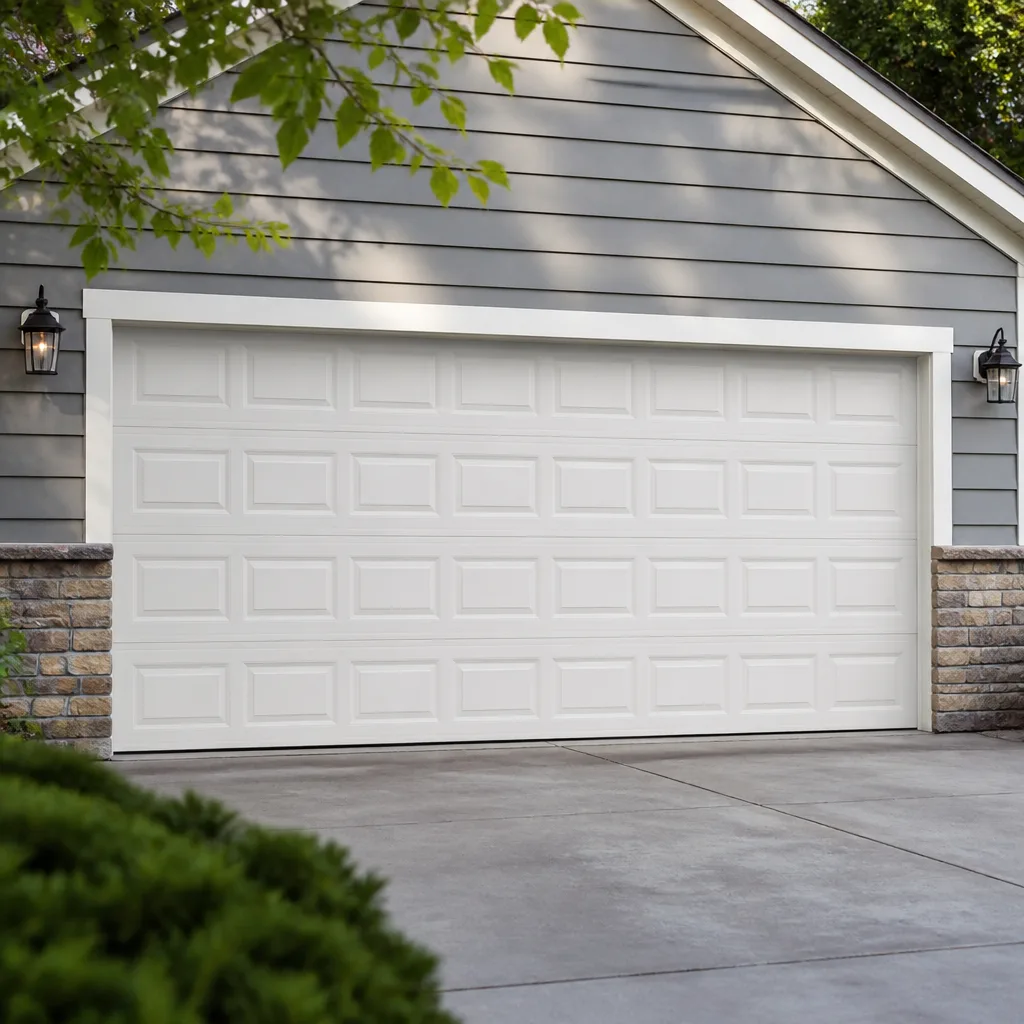 Raised-panel steel
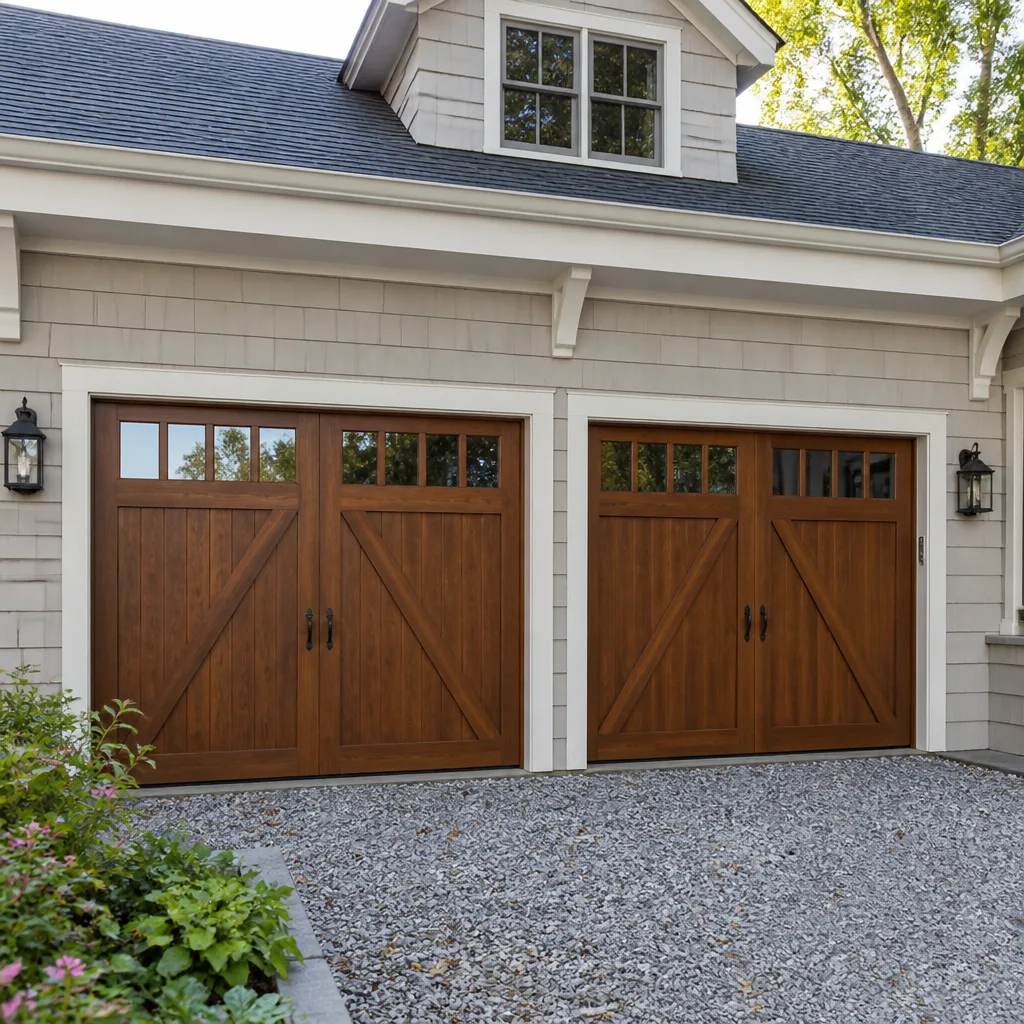 Carriage house
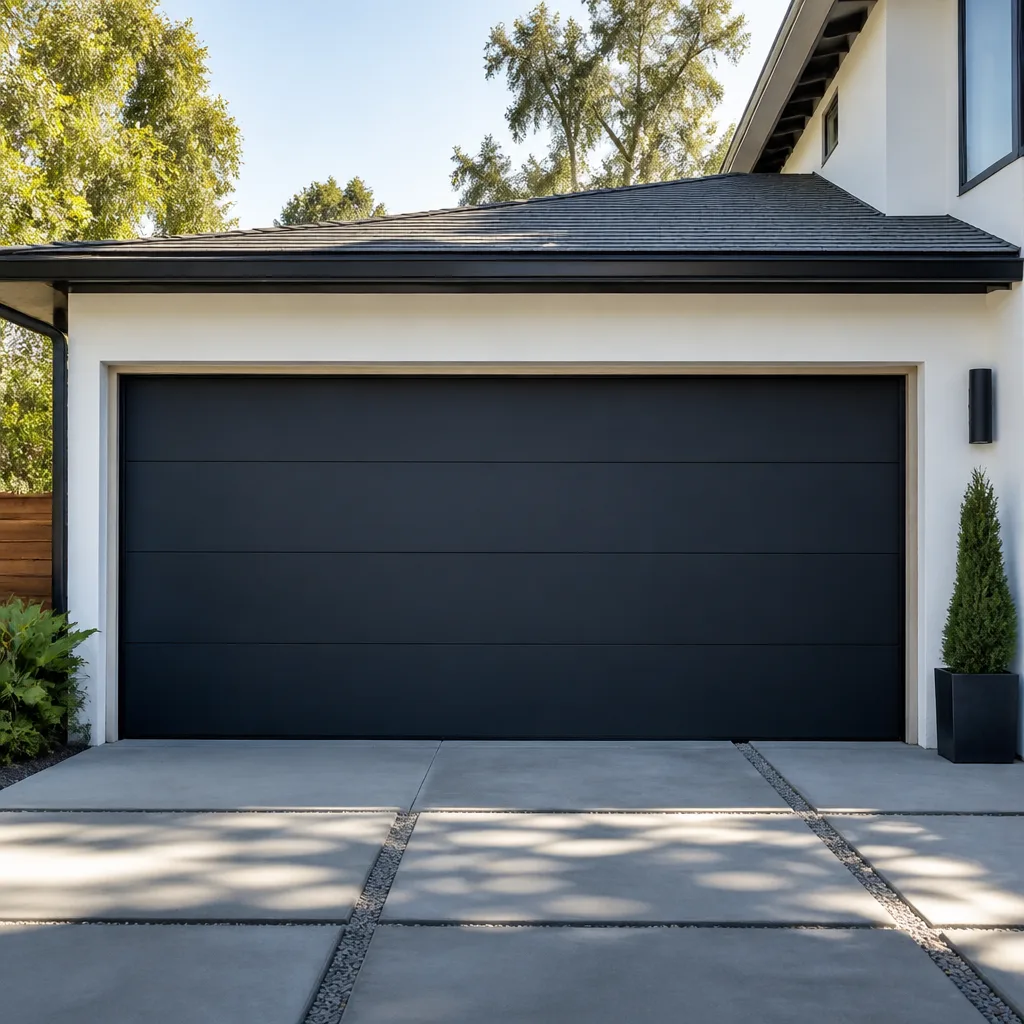 Modern flush
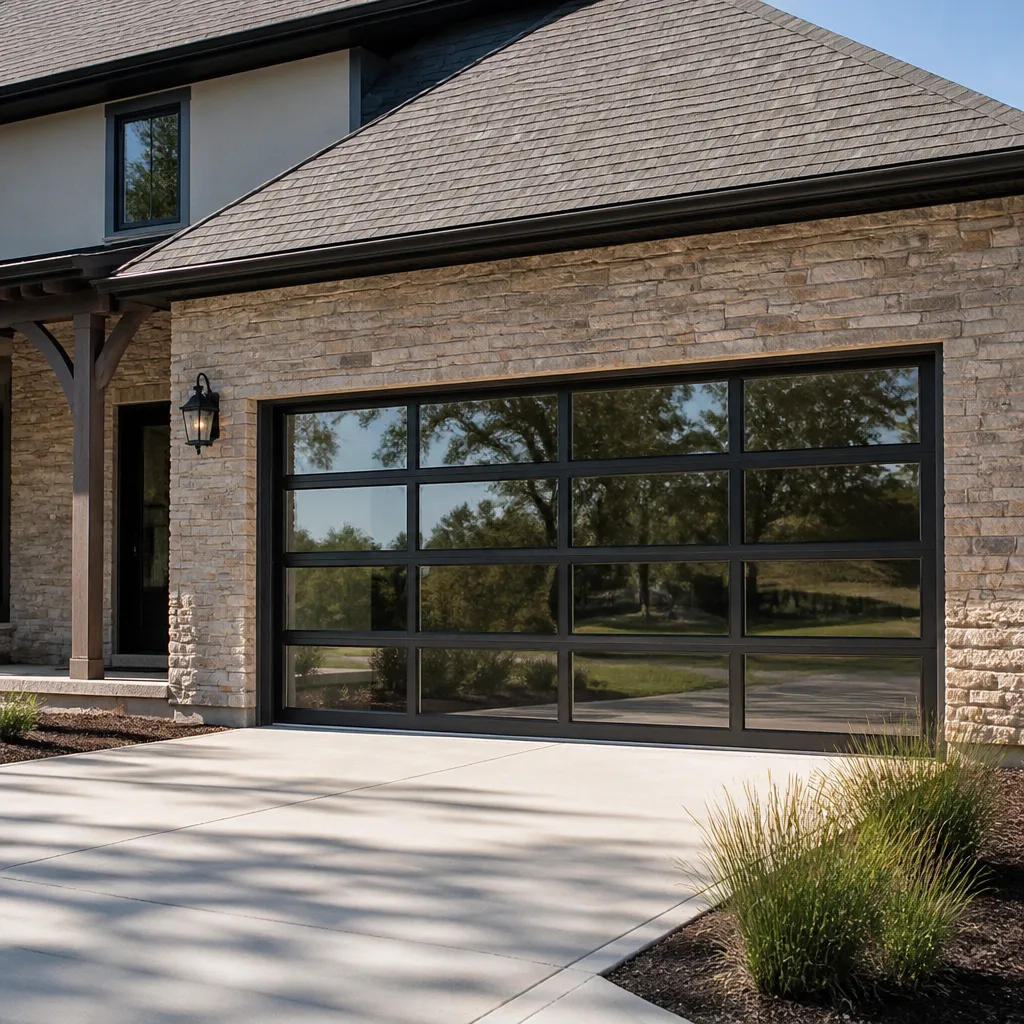 Full-view glass
 LiftMaster openers
 Chamberlain openers
Full 25-point door and opener safety check with every visit - springs, cables, rollers, tracks, and your LiftMaster or Chamberlain opener included
You get a price before we start. It does not change when the pro arrives.
Get your free estimateDIY vs Professional Garage Door: The Noblesville Homeowner’s Decision Guide
Torsion springs store enough energy to break a wrist or take out an eye when they release unexpectedly. That’s not a scare tactic, it’s physics. The honest DIY-versus-professional guide doesn’t hand you a personality test about how handy you feel; it tells you exactly where the line sits and why some tasks on the “easy” side of it aren’t worth your Saturday either. We see the results of misplaced confidence every week in Noblesville: doors hung crooked by a homeowner with the best intentions, sensors knocked out of alignment, opener gears stripped by a forced install. This guide draws that line task by task, so you can decide with clear eyes which jobs are genuinely yours and which belong to someone trained for them.
Quick Answer
For most Noblesville homeowners, minor adjustments like weatherstripping, sensor alignment, lubrication, and opener programming are genuinely reasonable DIY projects. Spring replacement, cable work, and structural panel repairs should always go to a trained technician because the stored energy and tension involved can cause serious injury. The decision comes down to three things: how much energy the component holds, what tools the job requires, and what a mistake would cost in time, money, and safety.
Styles & brands we work with
- Raised-panel steel
- Carriage house
- Modern flush
- Full-view glass
- LiftMaster openers
- Chamberlain openers
Table of Contents
- What Makes a Garage Door Repair Safe to DIY?
- Which Garage Door Tasks Are Genuinely Safe to DIY?
- Which Garage Door Repairs Should Always Go to a Professional?
- What Tools Do You Actually Need for Legitimate DIY?
- What Does a Botched DIY Repair Really Cost?
- Can You Program an Opener or Smart Home System Yourself?
- How Do You Do the Honest Math on DIY vs Professional?
- Why Noblesville Conditions Affect Your Garage Door Decisions
What Makes a Garage Door Repair Safe to DIY?
Garage doors sit in a strange category of home equipment. The door itself weighs 100 to 300 pounds, the spring system holds tension that can launch metal across a two-car garage, and yet the door sits right at eye level, with instructions all over the internet. That combination of easy access and high stored energy is why so many well-meaning DIY attempts end in a service call.
The way we see it, every garage door task falls into one of three buckets:
- Low energy, low risk: parts that move slowly or not at all under load. Weatherstripping, lubrication, sensor brackets, and minor dents on the bottom panel are examples.
- Moderate energy, moderate risk: the opener system and its electrical side. Programming a remote or keypad is a setup task; opening the motor housing or rewiring a wall control is not a good idea for a homeowner.
- High energy, high risk: torsion and extension springs, lift cables, bottom brackets, and full panel or track replacement. These components hold force that can cause injury the moment tension releases unexpectedly.
If a job involves loosening or removing a bolt on a component that holds tension, it’s in the third bucket. That’s the line. Everything below that line gets a real cost-benefit conversation. Everything above it is a phone call, and not a second opinion from a forum.
Which Garage Door Tasks Are Genuinely Safe to DIY?
There are several jobs on a garage door that any reasonably careful homeowner can handle, and doing them yourself saves a service call and keeps the door closing properly between professional visits. In Noblesville, where our winters bring freezing temperatures and spring thaw leaves everything damp, these routine tasks matter more than most people realize.
The following tasks are generally safe to DIY for an attentive homeowner:
- Replacing weatherstripping. The rubber seal along the bottom of the door pulls out of its track and presses back in. A new seal keeps rain, snow, and cold air out and takes about 20 minutes on most doors. If the seal is cracked or stiff, swap it before winter.
- Aligning safety sensors. The small photo-eye units near the floor should point at each other. If the opener won’t close, a misaligned or dirty sensor is the most common cause. Wipe the lens, adjust the bracket by hand, and watch for a steady light instead of a blinking one.
- Lubricating the track, rollers, and hinges. A garage door needs lubrication two to four times a year. Use a garage-door-specific or white lithium lubricant, not heavy grease. Cold weather thickens grease and slows the door.
- Pushing dents out of a bottom panel. Small cosmetic dents can sometimes be nudged back out from the inside with a soft mallet and a block of wood. If the dent has creased a structural rib, stop and call.
- Replacing the opener’s light bulbs and battery backup. Most openers use standard bulbs. Battery backup units on modern openers unclip and swap in minutes.
Notice that springs, cables, and panel alignment aren’t on this list. That’s not caution for caution’s sake. Our technicians have up to 12 years of experience, and even they approach a torsion spring with specific tools and respect for the tension it holds.
Which Garage Door Repairs Should Always Go to a Professional?
Spring replacement, cable work, and structural panel repairs are professional-only jobs. The energy stored in a torsion spring is measured in the hundreds of pounds of force, and a cable that’s under load can whip across the garage in a fraction of a second. These aren’t hypothetical dangers. They’re the reason spring work is one of the most common reasons people call us in Noblesville.
Here’s the professional-only list, and why each one belongs there:
- Torsion spring and extension spring replacement. Both types hold the door’s full weight under tension. Replacing them requires winding bars, the right knowledge of turns and cycles, and a proper understanding of how the door balances. Get this wrong and the spring can release with the door at full height. This is also why spring repair is a standard service for us, not a referred-out job.
- Lift cable replacement. Cables run from the bottom bracket to the drum above the door. If one snaps, replacing it means rebalancing the door and re-setting the spring tension. A cable that slips off its drum while you’re working on it can cut through a glove.
- Structural panel and track replacement. If the door has been hit by a vehicle, dropped off a jack, or bent by wind, the panels and tracks may be out of alignment far enough that the opener force has already strained the rest of the system. Panel and track work needs the door removed and re-hung level.
- Opener motor replacement or internal wiring. The electrical side of a garage door opener involves line voltage. If the opener has failed internally, or a wall control is wired wrong, the work belongs to a technician who can isolate the circuit.
- Bottom bracket work. The bracket at the bottom of the door is where the cable and the spring’s tension both anchor. Loosening it, even briefly, is the single most dangerous step in garage door repair.
If you’re not sure whether a repair is in this category, that’s the answer. If the diagnosis isn’t obvious, it isn’t a DIY job.
What Tools Do You Actually Need for Legitimate DIY?
Most homeowner DIY lists on garage door repair skip the tool question, and that’s the quiet reason so many projects stall halfway. Two jobs can look equally simple on a video and demand wildly different tools. Here’s the honest breakdown.
For the DIY tasks on our safe list, you’ll want to have the following on hand:
- A stepladder tall enough to reach the top of the door when open
- An adjustable wrench and a set of socket wrenches
- Screwdrivers (Phillips and flathead) in a couple of sizes
- White lithium or garage-door-specific lubricant
- A soft mallet and a block of wood
- A flashlight or clamp light for working under the door
That’s a reasonable homeowner toolbox. Now the professional-only jobs:
- Winding bars – two solid steel rods specifically sized to fit the torsion spring cone
- Spring clamp and locking pliers for securing the door in place during work
- Cable puller or come-along for tensioning lift cables
- A proper winding chart for the door’s weight and spring size
The last item is the one most homeowners miss. A spring’s winding count comes from the weight of the door, the wire gauge, and the length of the spring. Guessing wrong on those numbers is what turns a spring replacement into a phone call to us for spring repair and a rebalance the next morning.
What Does a Botched DIY Repair Really Cost?
The cost of a failed DIY repair is usually bigger than the job would have been in the first place. What we see most often in Noblesville is a predictable set of patterns, and each one has a typical cost consequence.
- A spring that releases during a DIY replacement. The door drops, the cables go slack, and sometimes the drum and bracket bend as a result. What started as a spring repair becomes a spring, cable, and bracket job.
- An opener forced into a misaligned door. Homeowners sometimes adjust the force setting to make a dragging door close. That works for a few days, then the opener’s gear or the door’s hinges give out. Now you have an opener repair and a door repair.
- A sensor knocked out of position and wired wrong. We’re often called because the opener won’t close at all after a sensor was adjusted. The photo-eye on one side of the door was swapped with the receiver on the other, or the bracket was bent beyond what a screwdriver can fix.
- A panel dented during a track adjustment. Adjusting the track is usually the first step of a bigger repair. If the door rolls off the track while it’s being nudged, a panel bends and the alignment gets worse.
- The warranty question. Many manufacturers state that a door or opener altered by an unqualified installer isn’t covered. That’s a fact worth asking about before you touch anything with a warranty tag on it.
The cost isn’t only money. It’s the day spent with the car trapped inside and the door stuck half open. If that’s already the case in your Noblesville home, that’s a call worth making sooner than later.
Can You Program an Opener or Smart Home System Yourself?
Programming a remote, keypad, or smart home app to your opener is genuinely reasonable DIY. Adding a new remote to a LiftMaster or Chamberlain opener, setting a four-digit keypad code, and connecting an opener to a smart home hub are all setup tasks that don’t involve opening the motor housing. The manuals for these brands are straightforward, and the reprogramming procedure is usually printed on the back of the opener.
Here’s the important distinction, and it’s the part most DIY guides leave out:
- Setup (DIY-friendly): pairing remotes and keypads, adjusting travel limits and force settings from the opener’s control buttons, connecting a wall console, adding the opener to a smart home app, and updating firmware on newer Wi-Fi openers.
- Internal work (not DIY): opening the motor housing, replacing the logic board, replacing the drive gear or belt, replacing the capacitor, or rewiring a wall control that has failed. These tasks void the manufacturer warranty on most models, including common Genie and LiftMaster units we see in Noblesville homes.
If your opener beeps, flashes a code, or won’t respond after a power outage, that’s usually a setup issue or a safety reversal, not a board failure. In our experience, the most common opener call we get in Noblesville is a remote that never got re-paired after a battery change.
How Do You Do the Honest Math on DIY vs Professional?
Doing the honest math means counting four things, not just the price of the part. The DIY parts cost is only one line. Add your time, the cost of the tools you don’t own, and the risk of error, and the comparison usually flips.
Here’s how we’d work through it for a typical repair:
- Add up the parts. A replacement spring, cable set, or bracket costs real money. Then count the specialty tool you’d need to buy once and use once.
- Add up your time. Include the trip to the store, the research, and the work itself. A job that takes a technician under an hour often takes a homeowner a full day or more.
- Add a risk buffer. If the job is in the professional-only category, the risk isn’t a bad outcome, it’s the injury risk. No savings outweigh that.
- Compare against a written estimate. A free estimate gives you a firm number for the same job, with the price agreed before any work starts. That’s the number to compare against everything above.
The written estimate is the piece that makes the comparison fair. When a homeowner calls us for garage door repair in Noblesville, we look at the door, give a written price, and the price doesn’t change when the tech starts work. There’s no hourly clock running and no surprise line item at the end. That level of certainty is what DIY math usually can’t match once you count everything.
Why Noblesville Conditions Affect Your Garage Door Decisions
Noblesville’s climate is the quiet factor in every garage door decision. Our summers bring humidity that swells wood panels and stiffens rubber seals. Our winters bring freeze-thaw cycles that work their way into track anchors and concrete, and a door that ran smoothly in October can shudder in January. Spring is the season when we see the most neglected weatherstripping finally give out, letting water into the garage after the first heavy rain.
That has two effects on the DIY-versus-professional question. First, the routine tasks (lubrication, weatherstripping, sensor cleaning) matter more here than in a mild climate. Skipping them for a year is why some doors in older Noblesville neighborhoods run rough. Second, the freeze-thaw pattern means a bent track, a sagging panel, or a misaligned roller isn’t always a homeowner mistake; sometimes it’s weather doing its thing. When the door starts to drag, resist the urge to raise the opener’s force setting. That hides the symptom and stresses the opener.
For bigger jobs, matching a new door or opener to the house matters as much as the brand. The neighborhoods around the Historic District and the newer subdivisions off State Road 37 have different ceiling heights and door sizes, and the right Clopay or Amarr model depends on both. If the question has moved from repair to replacement, garage door installation is a scheduled job with a free measure and a written price, not a same-day service call.
Whether it’s an opener that’s stopped responding or a door that’s dragging on one side, our team works on the brand you have. That matters for garage door opener repair in Noblesville, where LiftMaster and Chamberlain units are common, and the diagnosis should start from the brand’s actual behavior, not a generic checklist. Same for springs: what’s on a Clopay door and what’s on a Wayne Dalton aren’t the same job, and the technician should know that before the door goes up on the lift.
Common Mistakes to Avoid
- Adjusting the opener’s force setting instead of fixing the door. Raising the force setting makes the opener push through a problem the door has been telling you about. The door keeps dragging, and the opener eventually burns out. Fix the alignment or the roller, and the opener goes back to working as designed.
- Winding a torsion spring with a pair of vise grips. Vise grips can slip off the cone and let the spring release. Winding bars are the right tool because they fit the cone and let you keep control. This is one of the most common reasons a DIY spring job ends in an injury call.
- Pulling a panel that’s still attached at the hinge. Replacing a panel without removing the door from the track can bend the adjacent panels and put new stress on the tracks. In Noblesville’s colder months, cold metal is more brittle when it gets bent.
- Buying a spring by the size of the old one without weighing the door. If the door has been repaired before, the last spring might already be the wrong size. A spring has to be matched to the door’s weight and the drum’s cable path, not just to whatever came off.
- Ignoring the safety sensors during a panel or weatherstripping job. The photo-eye on one side sits near the track. When you’re working on the bottom of the door, the bracket gets bent, the eyes stop lining up, and the opener won’t close. Always check the sensor lights after any work near the bottom of the door.
- Assuming a new opener fixes a bad door. If the door is out of balance or the springs are weak, a new opener works harder from day one and can fail early. The opener’s job is to move the door, not lift it.
- Buying a part based on a photo online. Garage door drums, cables, and springs come in sizes that look nearly identical in a listing. Getting the wrong one wastes the trip and the return, and sometimes the door is stuck half open while you wait for the correct part.
See the difference
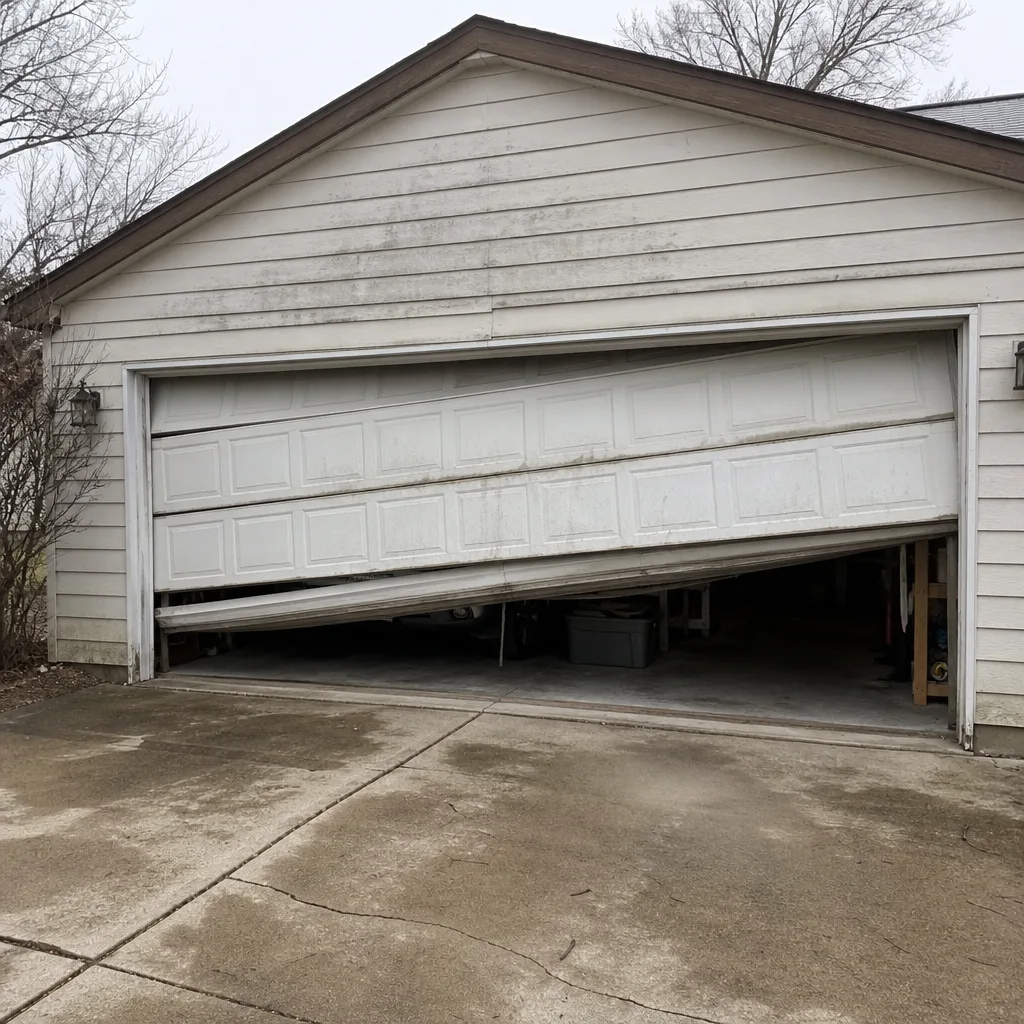 Before
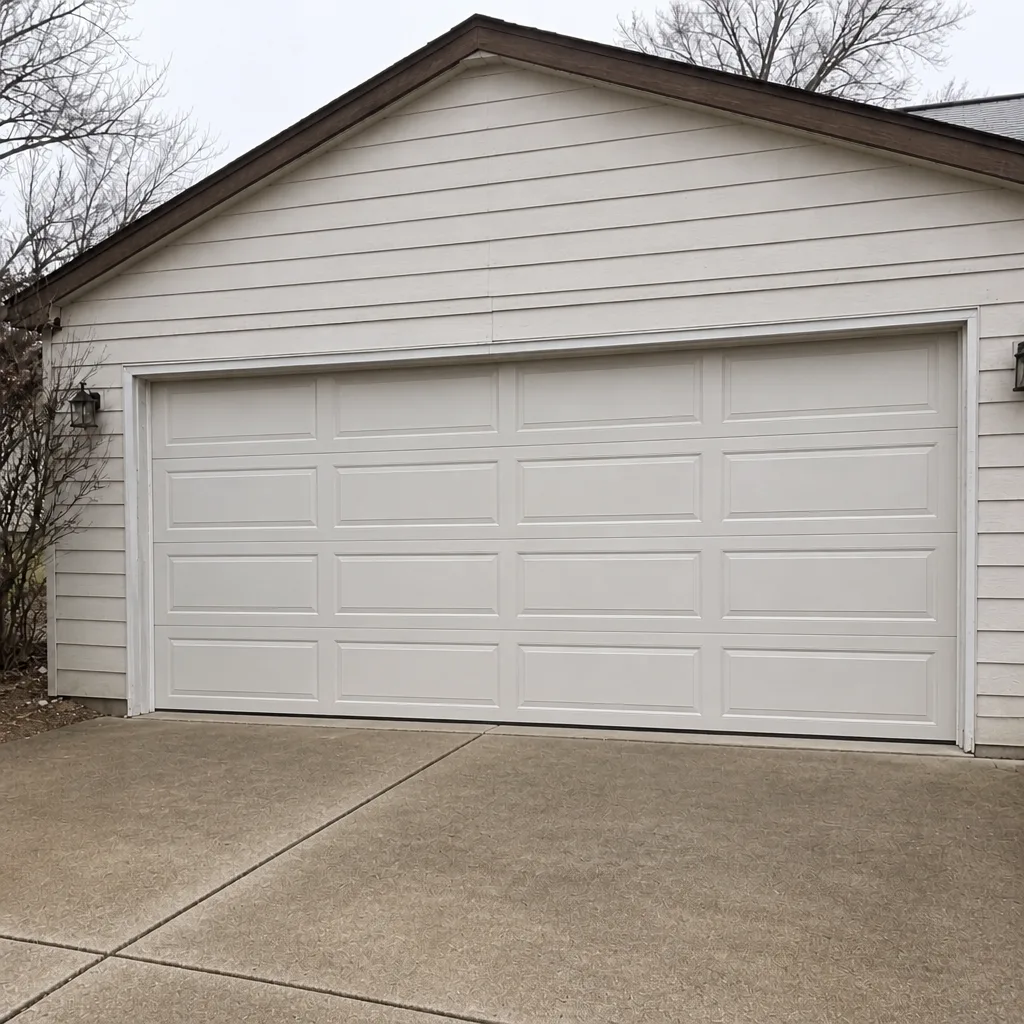 After
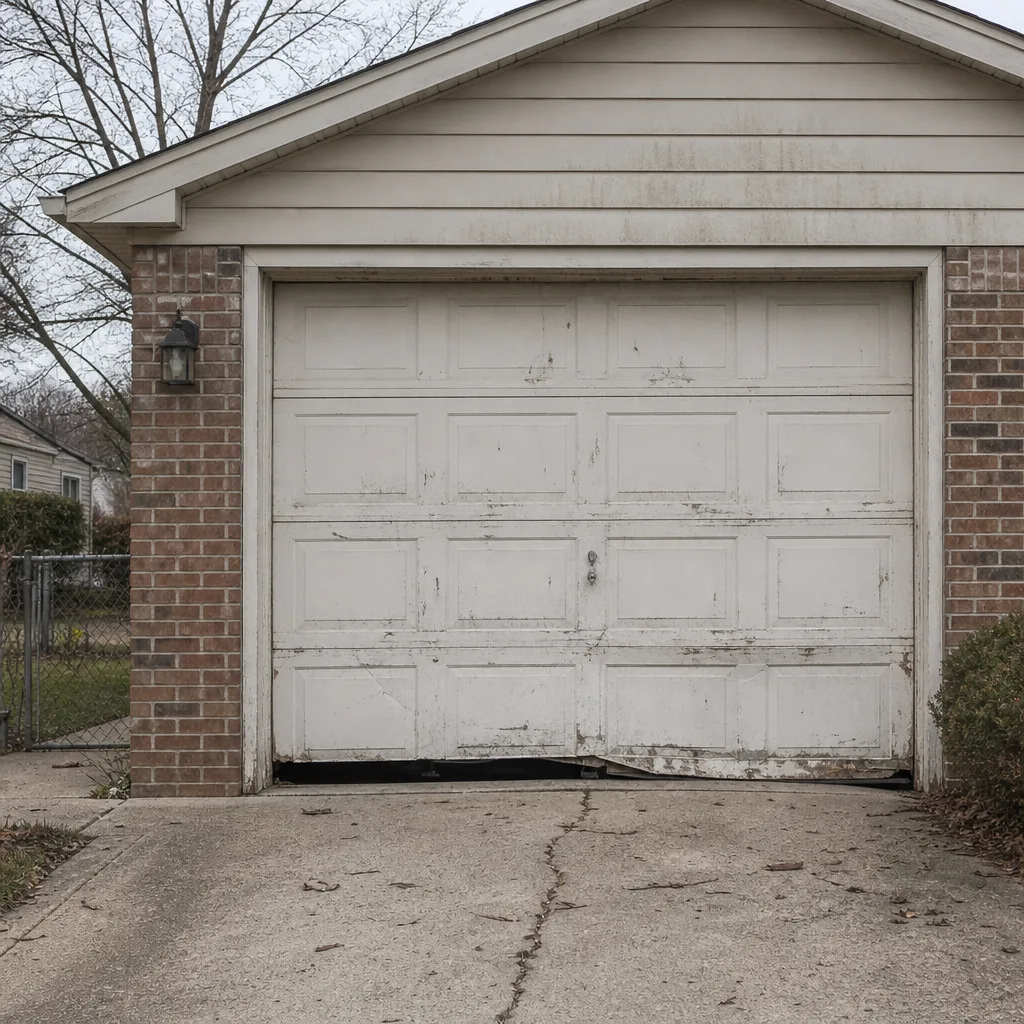 Before
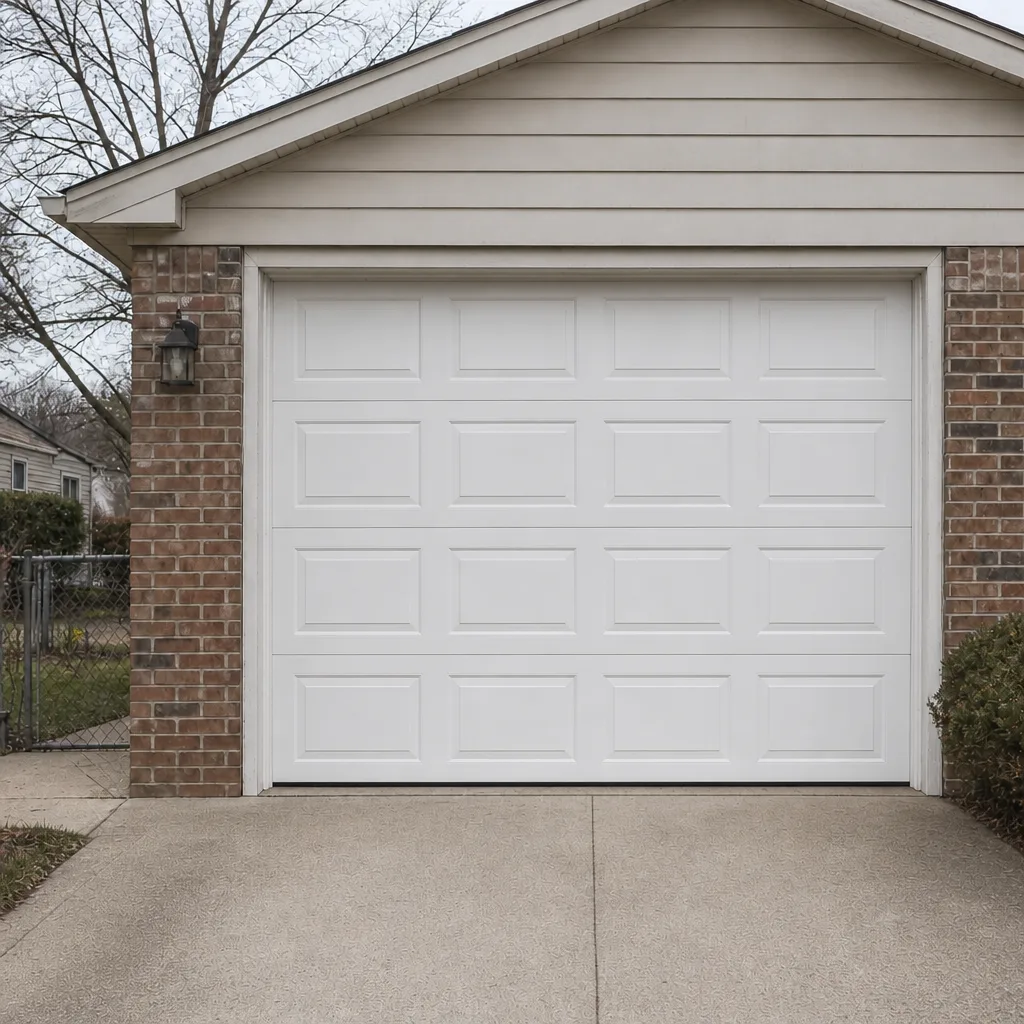 After
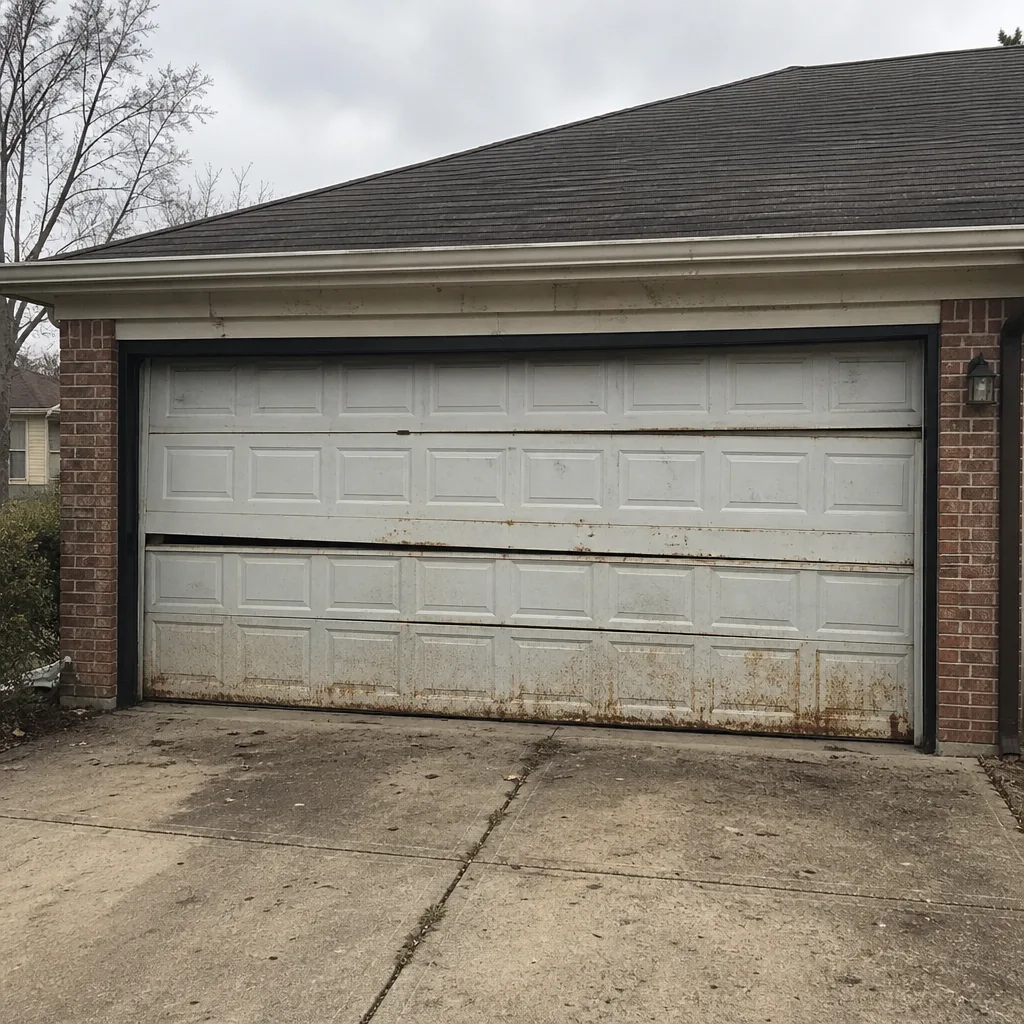 Before
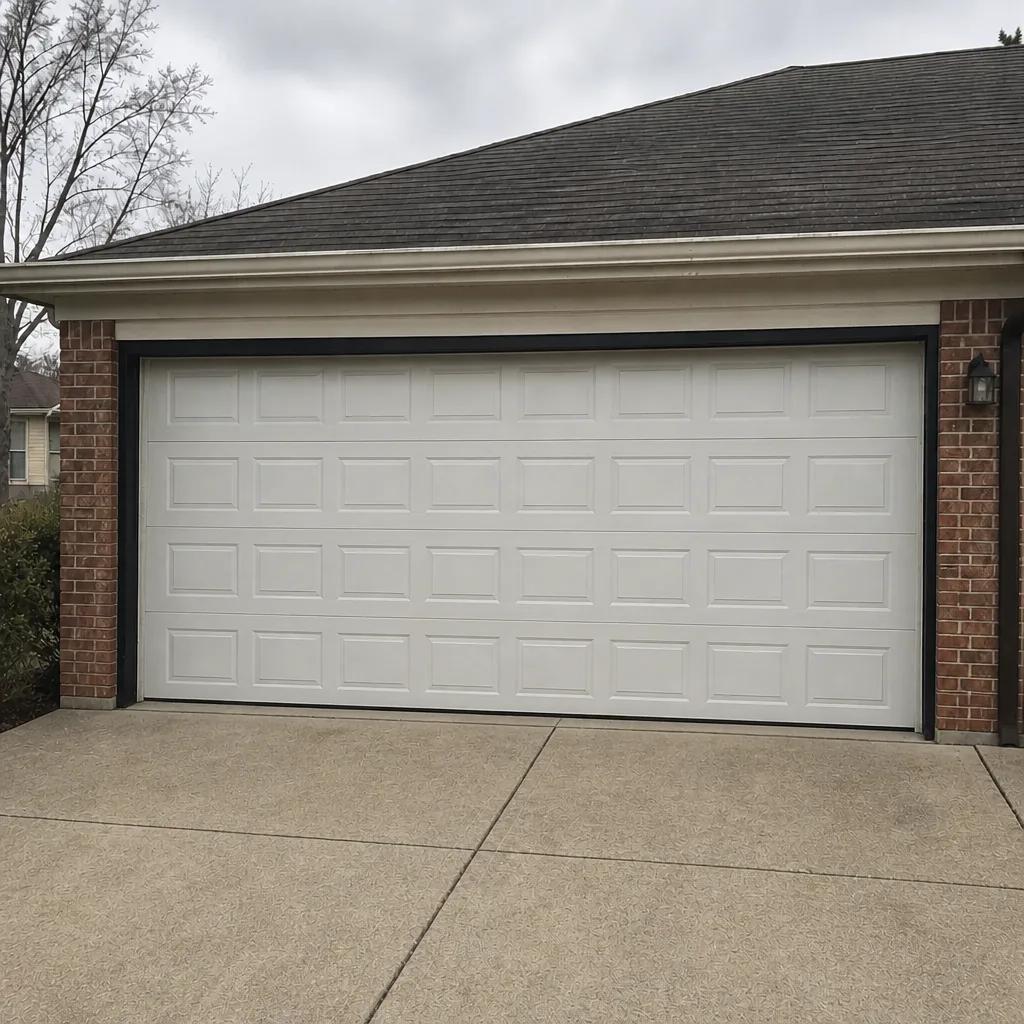 After
When to Call a Professional
Call a professional when the task involves a spring, a cable, a bottom bracket, structural panel work, or the inside of an opener motor. Call when the door is off its track, when the opener is burning through fuses, or when the door has been hit by a vehicle. Call when the door has dropped or won’t stay up on its own; that’s a spring problem and it’s not safe to diagnose yourself. In Noblesville, our team handles spring repair as a standard service, not a reluctant referral, and we work on the brands you own. We answer 24/7 for the situations that can’t wait, with fast dispatch from 7am to 7pm, Sunday through Friday. If the door fails on a Saturday, we’re closed, but you can call and we’ll book you for Sunday. We’re open Sunday through Friday, 7am to 7pm. Noblesville Garage Door Repair Pros offers free estimates in Noblesville. Call (866) 616-9625.
Frequently Asked Questions
For minor tasks like weatherstripping or sensor alignment, DIY is usually cheaper because there’s no service call. For spring replacement, cable work, or panel replacement, a professional repair is typically cheaper once you count the tools, the time, and the risk of a second repair. The written estimate gives you the real number to compare against your DIY parts cost, and the price is agreed before any work starts.
No, torsion spring replacement should always be done by a trained technician. The spring holds enough stored energy to cause serious injury if it releases unexpectedly while being wound or removed. A wound torsion spring under tension can break a wrist or cause worse, and the right tools and technique make the difference. Call (866) 616-9625 for spring repair in Noblesville, and ask for a free written estimate.
Most cities require a permit for structural changes, and garage door replacement rules vary by jurisdiction. Ask the City of Noblesville building department directly before scheduling installation, since permit requirements can depend on whether the door’s opening size is changing and on the specific job. A written estimate should spell out what the job involves, so you can match it to the permit question.
Common warranty-voiding actions include opening the motor housing, replacing internal components like the logic board or drive gear, and rewiring a wall control yourself on many brands, including LiftMaster and Chamberlain. Programming a remote or keypad usually doesn’t void the warranty. If a wall control has failed, or the opener is behaving erratically, call us for garage door opener repair and we’ll check the warranty-sensitive parts first. You can also reach us at (866) 616-9625 for a free estimate.
Yes, and a door stuck half open is usually a sign of a broken spring or a cable that’s come loose, which is a same-day service call for us. We answer 24/7 and dispatch Sunday through Friday, 7am to 7pm, so call (866) 616-9625 and we’ll get the door looked at. The price is quoted and agreed before any work starts. If you call outside dispatch hours, we’ll book you into the next opening. A door stuck half open is not a DIY repair, so leave it where it is until a technician arrives.
Installation is not a realistic DIY project for most homeowners. A garage door weighs 100 to 300 pounds, needs to be lifted into the tracks level, and the spring has to be matched and wound to the door’s weight. A poorly installed door can come off the track the first time it’s used. Installation is a measured, ordered, scheduled job with a free measure and a written price; call (866) 616-9625 for a free estimate.
Weatherstripping replacement, sensor alignment and cleaning, lubrication, opener remote and keypad programming, and small cosmetic dents on a bottom panel are all reasonable DIY tasks. Spring work, cable work, bottom brackets, panel replacement, and any work inside the opener motor belong with a technician. Our technicians have up to 12 years of experience, and they handle the parts of the job that hold tension.
The Bottom Line
The DIY-versus-professional decision on a garage door isn’t about how confident you feel; it’s about how much energy the component holds and what a mistake would cost. Weatherstripping, sensors, lubrication, and opener programming are yours to handle. Springs, cables, bottom brackets, panel work, and the inside of the opener are not, and no parts savings justify the risk. Do the honest math, get a free written estimate for anything on the professional side, and remember the price is agreed before work starts. Our team covers repair, replacement, and new installation in Noblesville, and we answer 24/7. Call (866) 616-9625 for a free estimate.
Written by the team at Noblesville Garage Door Repair Pros.