
Last updated November 21, 2026
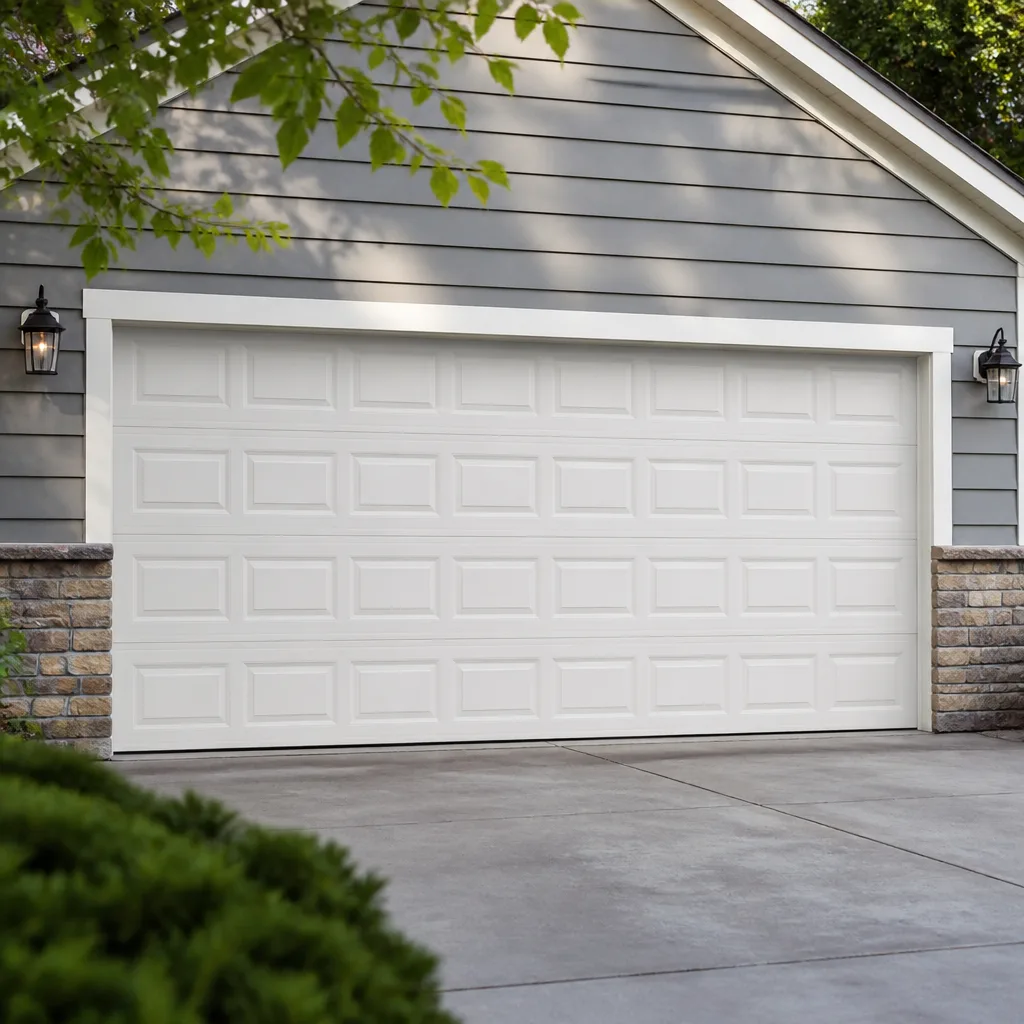 Raised-panel steel
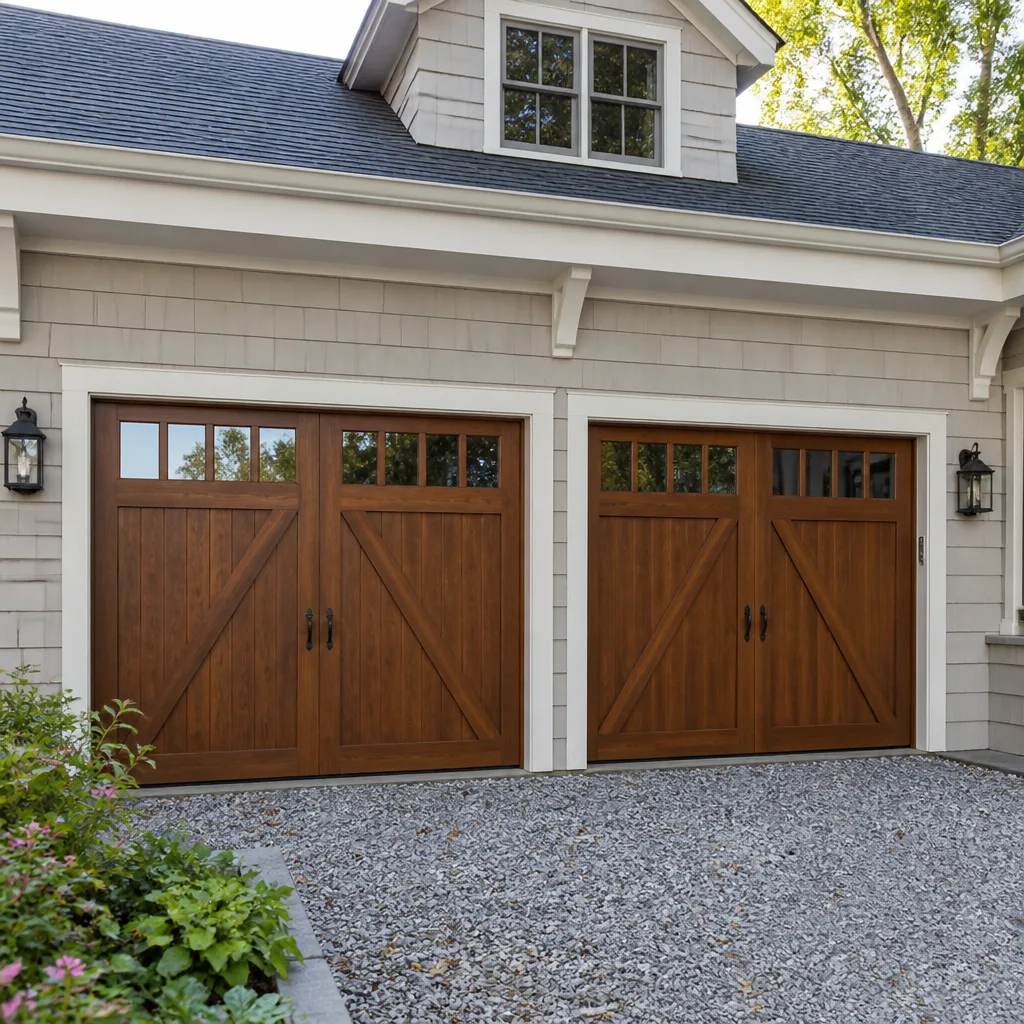 Carriage house
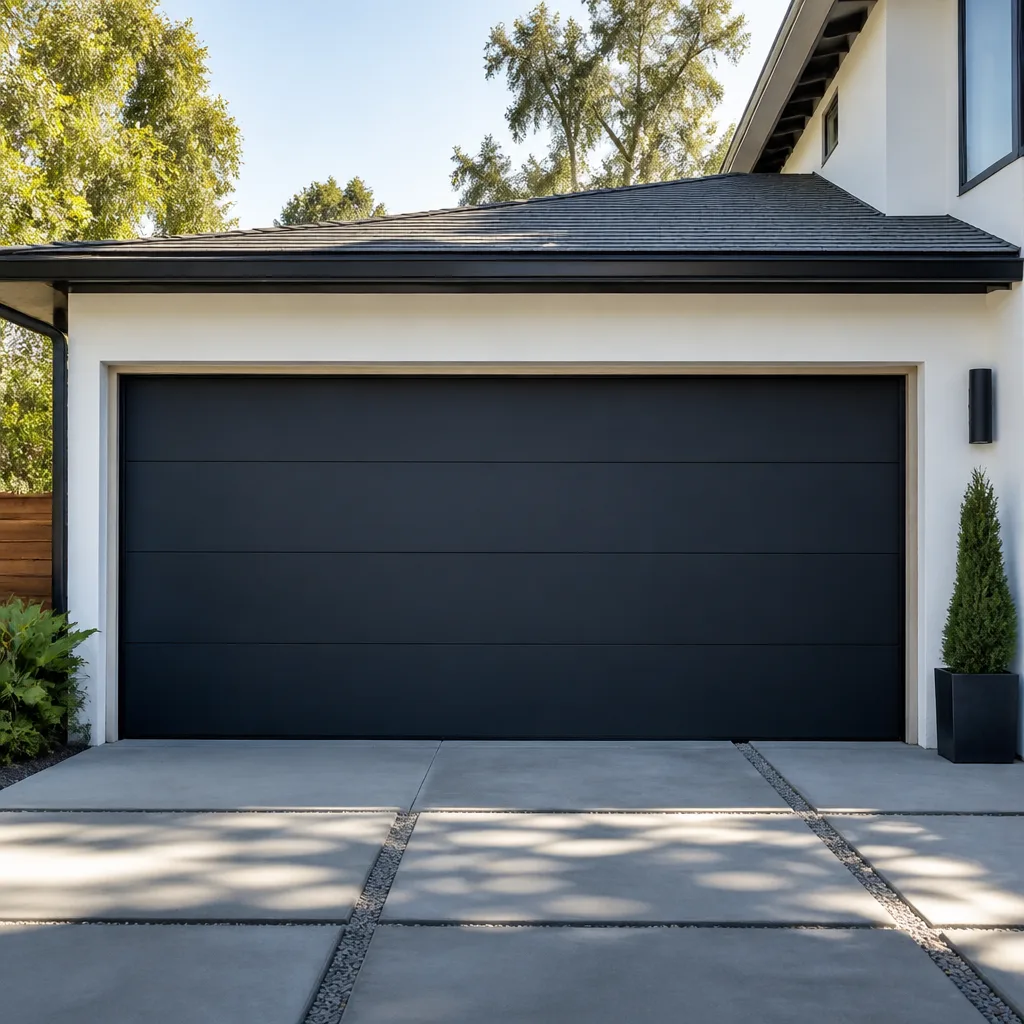 Modern flush
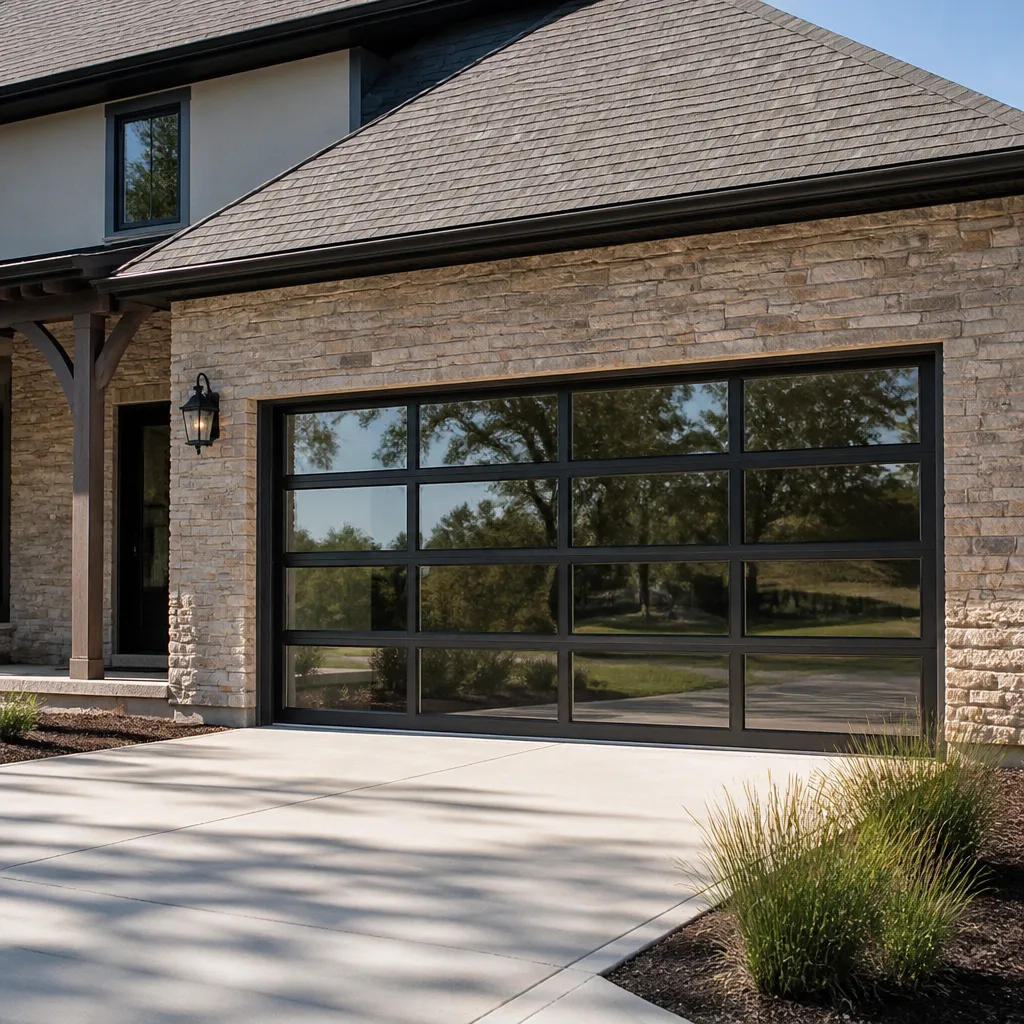 Full-view glass
 LiftMaster openers
 Chamberlain openers
Full 25-point door and opener safety check with every visit - springs, cables, rollers, tracks, and your LiftMaster or Chamberlain opener included
You get a price before we start. It does not change when the pro arrives.
Get your free estimateSeasonal Garage Door Care for Noblesville: Year-Round Homeowner’s Guide
Most homeowners in Noblesville treat garage door care as one job on one Saturday in spring: lube it, look at it, forget it until something breaks. That approach is exactly why the emergency calls stack up in January and July rather than spreading evenly through the year. A garage door isn’t a static object. It’s a moving assembly of springs, cables, rollers, and an opener that all respond to temperature, humidity, and how many cycles they’ve run since the last service. What fails in deep cold was usually set up months earlier. This guide maps each maintenance task to the season that actually stresses that component, so you’re working ahead of the failure instead of reacting to it. Noblesville weather rewards a deliberate schedule.
Quick Answer
Garage door maintenance in Noblesville works best on a four-season cycle: lubricate and inspect weatherstripping before the first freeze in fall, watch spring tension and avoid forcing a stiff door in winter, check bottom seals and cable drums after spring thaw, and clean opener photo-eyes and tighten hardware in summer. Fall and spring are the two inspections that prevent the most repairs; winter and summer are when you protect what’s already there. Anything involving torsion springs or cables should go to a trained technician, not a homeowner.
Styles & brands we work with
- Raised-panel steel
- Carriage house
- Modern flush
- Full-view glass
- LiftMaster openers
- Chamberlain openers
Table of Contents
- Why Season Matters More Than You’d Think in Noblesville
- Fall: The Two Tasks You Can’t Skip Before the First Freeze
- Winter: Cold, Spring Tension, and What You Can Safely Touch
- Spring: Post-Thaw Inspection After Freeze-Thaw Cycles
- Summer: Heat, Humidity, and Opener Electronics
- The One-Page Seasonal Task Calendar
- Warning Signs by Season
- When Seasonal Care Isn’t Enough
Why Season Matters More Than You’d Think in Noblesville
A garage door in Noblesville lives through a wider temperature swing in a single year than many garage doors do across a decade elsewhere. Central Indiana summers push the metal and wood warm; winters pull them cold. That repeated expansion and contraction works on every fastener, seal, and joint in the system. The door itself is built to handle it, but the small parts around it wear faster than most homeowners expect because each cycle of heating and cooling adds a little strain.
The mechanical math is simple. Springs are calibrated to hold a specific door weight with a specific amount of tension. Change the temperature and the door’s effective weight shifts slightly because the metal and the lubricated rollers behave differently. The spring doesn’t know the season changed; it just feels a heavier or lighter load. That’s fine within tolerance. It becomes a problem when the same spring has been compensating for a dry track, a stiff roller, or weatherstripping that’s been dragging for months.
This is also where the two-season emergency pattern comes from. January is when a weakened spring finally gives way under cold-day load. July is when an opener that’s been running hot in the attic finally stops responding, or a photo-eye drifts out of alignment in the heat. Neither is a random failure. Both are accumulated seasonal stress meeting a component that was never adjusted for it.
Noblesville homes also see a mix of attached garages on slab foundations and detached garages, often with uninsulated or partially insulated garage spaces. Uninsulated garages swing harder with the outside temperature than insulated ones, which is why seasonal care matters more for those. Homes in established neighborhoods like Old Town or near the White River corridor often have garages that were built decades ago with the original hardware, which means a maintenance schedule built for modern doors may need adjustment for the tolerance of older springs and openers.
One clarification worth making upfront: seasonal care is not the same as a repair plan. It’s the small, safe work you do between professional service visits. The two things we recommend homeowners never touch are the torsion springs and the cables, because both are under dangerous tension and a mistake can cause serious injury. Everything else in this guide is within reach of a careful homeowner with basic tools.
Fall: The Two Tasks You Can’t Skip Before the First Freeze
Fall maintenance has one job in central Indiana: get the door through the first hard freeze without a failure on the coldest night of the year. There are two tasks that matter most, and skipping either one is why a lot of January emergency calls start as an autumn oversight. Both are simple. Neither takes long.
Task 1: Lubricate the moving points that get cold first
Cold thickens lubricant. A hinge or roller that moves freely in September can feel sticky by the first week of November, and that stiffness transfers straight into the spring tension. The first freeze is when that extra load lands.
Use a garage-door-specific lubricant, not general-purpose grease or WD-40 (which is a solvent, not a lubricant, and will actually dry the parts out over time). Apply it to:
- Hinge pivots, one drop per hinge, top and bottom of each
- Steel rollers (nylon rollers usually don’t need oil and can attract grit if over-lubricated)
- The torsion spring coils themselves, lightly, with a spray that reaches the whole coil
- Bearing plates at each end of the torsion shaft
- The opener rail and chain or belt, following the opener manufacturer’s spec
Don’t spray the tracks. Tracks should stay dry and clean; lubricant in the tracks collects dust and grit and can cause rollers to bind worse than they did before.
Task 2: Inspect the weatherstripping
The bottom seal on the door and the perimeter weatherstrip on the frame are the home’s first barrier against cold air, snowmelt, and small pests. In Noblesville, a failed bottom seal is more than an annoyance: it lets cold air into the garage, which is exactly what pushes a marginal opener or spring over the edge in January. Check the bottom seal by closing the door on a sheet of paper; if you can pull the paper out easily, the seal is compressed or torn and should be replaced before the freeze. Check the vertical weatherstrip along the sides and top of the frame by running a hand along each edge; gaps mean air infiltration and moisture. Both replacements are quick and inexpensive compared with the repair a cold draft can trigger.
Fall secondary checks
While the door is in front of you, do these too. They’re fast and each one catches a problem before it grows:
- Test the door’s balance by disconnecting the opener (pull the release cord with the door fully closed) and lifting it halfway. It should stay in place with light resistance. If it drops or rises on its own, the springs need professional adjustment.
- Look at the cables where they meet the bottom bracket and the drum. Fraying, kinks, or slack all mean a call to a technician, not a homeowner fix.
- Check that the safety reverse works by placing a 2×4 flat on the floor under the closing door; the door should reverse on contact.
- Clear leaves and debris from the track channels and wipe the tracks down.
Winter: Cold, Spring Tension, and What You Can Safely Touch
Winter in Noblesville is where a lot of garage door diagnosis happens, and most of it starts with the same report: the door is slow, or sticking, or only going partway up. Cold is doing two things at once. It’s thickening the lubricant that was fine in September, and it’s tightening the metal that makes up the springs and door panels. The spring has to work harder against the same door weight.
What cold actually does to spring tension
Torsion springs are calibrated for a specific door weight. As the outside temperature drops, the steel in the door panels contracts slightly and the door effectively becomes a fraction heavier against the spring. Rollers also drag more. The combined effect is that a spring at the edge of its service life fails in January rather than March. That’s why the timing of failures isn’t random.
If the door feels sluggish on a cold morning but opens fully, that’s usually within tolerance and may just need a lubricant refresh. If the door doesn’t open at all, or opens halfway and reverses, or makes a sharp snapping noise, the spring has likely failed. Snapped springs are a call-a-technician situation, not a shove-it-open situation. Pulling on a door with a broken spring can cause the door to fall and can damage the opener.
What you can safely adjust
A few things are within homeowner reach in winter, provided the door is intact and the spring isn’t broken:
- Re-apply garage-door lubricant to hinges, rollers, and the spring coils if the door is noticeably stiff
- Check that the opener’s force settings haven’t been set too low (many openers have a travel and force adjustment; consult the manual for your model)
- Clear ice and snow from the bottom seal and the floor threshold if the seal is stuck
- Confirm the photo-eyes are aligned and clean (they can drift after cold snaps and vibration)
- Check that the manual release cord hasn’t been pulled or partially engaged
What requires a technician
Anything with the torsion spring or the cables is off-limits for DIY. This includes:
- Adjusting tension on a torsion spring (the cables are under hundreds of pounds of tension and a slip can cause serious injury)
- Replacing a broken torsion or extension spring
- Replacing or re-tensioning the lift cables
- Replacing the cable drums at the top corners of the door
- Any hard metal-on-metal noise during operation
If you have a LiftMaster or Chamberlain opener, the force settings are usually accessible but vary by model. If you’re not sure which model you have, that’s a good reason to call someone who knows it. Our technicians have up to 12 years of experience with these exact opener systems and can tell within a few minutes whether the problem is force settings, a worn spring, or something else.
Spring: Post-Thaw Inspection After Freeze-Thaw Cycles
Indiana spring is where the invisible damage shows up. Freeze-thaw cycles work on the concrete floor, the bottom seal, and the exterior hardware in ways that don’t show until the door has to hold against water. Spring is the season to catch what winter set up.
What freeze-thaw actually does to a garage door
Water gets into a small crack in the bottom weatherstrip or the concrete apron, freezes overnight, and expands. A single winter of that is enough to widen a gap that was a hairline in October. Multiply by every freeze-thaw cycle in a central Indiana winter, and the door’s floor seal can be noticeably compromised by March. Cables are also at risk in spring because the coldest days put extra strain on the drums and cable ends, and the wear shows up once temperatures stabilize.
Post-thaw inspection checklist
- Check the bottom seal. Close the door and look along the floor line from inside. Any visible light means the seal has flattened, torn, or pulled loose. Reach down and feel along its length; it should feel springy, not brittle.
- Look at the concrete apron. Cracks running from the garage door threshold outward are common in Noblesville after winter. Small cracks are cosmetic; cracks wider than a pencil may let water under the door and should be sealed.
- Inspect the cables and drums. Look at each corner where the cable meets the drum at the top of the door. Cables should sit neatly in the grooves with no fraying, kinks, or slack. Any of those means a technician call before the door moves again.
- Check the lift cables at the bottom brackets. Same deal: no fraying, no loose brackets, no cable dragging.
- Test the safety reverse. Spring is a good time because the test is quick and it confirms the door is still reacting correctly to obstruction.
- Clear the tracks and re-lubricate lightly. Wipe down with a dry cloth first; add fresh lubricant only to the same hinge and roller points from fall.
Why spring is the best season for a professional inspection
A springtime professional inspection catches problems at the point they’re cheapest to fix. A cable that’s starting to fray in March is a simple cable replacement. The same cable that fails in July is a more involved repair and a safety risk in between. For Noblesville homeowners, we generally recommend a professional inspection once a year, and spring is the natural slot on a central Indiana calendar because the winter stress is over and the summer heat hasn’t yet arrived.
For a broader look at repair categories, see our main garage door repair service.
Summer: Heat, Humidity, and Opener Electronics
Summer problems in Noblesville look different from winter problems. Cold snaps break springs. Heat and humidity break openers, cause wooden doors to swell, and drift the photo-eyes out of alignment. The July emergency pattern is real, and it has an explanation: the components that failed in winter left the system slightly out of spec, and the heat finishes the job.
How heat affects opener logic boards
Modern openers from brands like Craftsman or Raynor are built to run in a garage, but a garage is still an attic-adjacent space that gets much hotter than the rest of the house. Logic boards degrade faster in high heat. Small capacitors dry out. Solder joints crack. The opener still responds, but it starts randomly reversing or refusing a signal. If your opener is doing something intermittent in July and August but works fine in the morning, heat is a likely culprit.
A few things help in summer:
- Keep the opener’s housing clear of stored items so the electronics can self-ventilate
- Check that the opener isn’t overloaded by a stiff door (a stiff door puts more electrical draw on the motor and more heat into the board)
- If the opener has a battery backup, test it in summer; heat degrades batteries faster
- Clean the photo-eye lenses (heat and dust can cause drift, not just spiders)
Photo-eye alignment
The photo-eyes are two small sensors at the base of the door frame, one on each side. If they’re out of alignment, the door won’t close or reverses instantly. In summer, the combination of HVAC-driven air movement, garage door vibration, and heat can drift the sensor mounts. Realign them by eye, and confirm with a small object waved in front of the beam. If they won’t stay aligned, the mount is loose or the sensor is failing. That’s an opener repair issue, and we cover it in detail on our garage door opener repair page.
Humidity and wood door swelling
Central Indiana summers are humid, and wood garage doors (and wood-framed garage doors) absorb moisture and swell. Usually the swelling is invisible, but on an older wood door with paint or finish failing in a few spots, the swelling can be enough to interfere with proper closing. The fix is a finish refresh in spring or early summer, before the humidity peak. If the door is already sticking on the sides or top, check the frame for swelling at the contact points; a light sanding and finish repair by a painter or the door manufacturer’s recommended service is the usual approach.
The One-Page Seasonal Task Calendar
Here’s the whole year on one page. Times are estimates for a homeowner doing the task once; if a task feels unsafe or unclear, skip it and call a technician. Nothing here is worth an injury.
Fall (before the first hard freeze)
- Lubricate all hinge pivots, steel rollers, spring coils, and bearing plates. 15-20 minutes.
- Inspect and replace bottom weatherstripping if compressed or torn. 15-30 minutes.
- Test door balance with the opener disconnected. 5 minutes.
- Inspect cables and drums for fraying or slack. 5 minutes.
- Test safety reverse with a 2×4. 2 minutes.
- Clear and wipe tracks. 10 minutes.
Winter (ongoing)
- Watch for sluggishness and listen for new noises. Ongoing.
- Re-lubricate stiff hinges and rollers on cold snaps. 10 minutes per refresh.
- Clear ice and snow from the bottom seal and threshold. 5 minutes as needed.
- Confirm photo-eye alignment after cold snaps. 2 minutes.
- Do not touch torsion springs or cables. Call a technician.
Spring (first dry week after thaw)
- Full post-thaw inspection: seal, concrete apron, cables, drums, brackets. 20-30 minutes.
- Re-lubricate hinges and rollers sparingly. 10 minutes.
- Test safety reverse. 2 minutes.
- Book an annual professional inspection. 5 minutes on the phone.
Summer (hot weather)
- Clear the opener housing of stored items. 5 minutes.
- Clean photo-eye lenses. 2 minutes.
- Check for sticking on wood doors and touch up finish. 15-30 minutes.
- Test battery backup if the opener has one. 5 minutes.
The total time across the whole year is under three hours. That’s the full homeowner task list. The professional work (spring inspection, cable inspection, opener diagnosis) is separate and is usually a once-a-year call. The balance is where the real savings live: three hours of seasonal care prevents most of the failures that turn into emergency calls.
Warning Signs by Season
Every season sends signals before a component fails. Knowing which season produces which signal is a lot of the skill. Here’s how to read it.
- Fall: Any hesitation on opening, a new squeak, or a door that closes with a hard stop is worth investigating before the freeze. Weatherstripping that fails the paper test is a fall signal.
- Winter: A sharp snap at the start of travel, a door that rises only partway, or a door that closes with a dull thud rather than a smooth settle are all cold-weather signals of spring or cable problems.
- Spring: Light visible under the closed door, cracks in the apron, or cables that look less tidy than they did in October are the spring signal set. Any of them warrants a call before the door gets more use.
- Summer: Intermittent opener failures, door reversal on the way down, or a photo-eye that needs realigning more than once are the summer signals. So is a wood door that sticks or drags.
Two signals are season-neutral and always mean call: the door won’t open at all with the manual release disengaged from the opener (spring failure), and any visible damage to the cables. Both are dangerous to work on and both are quick fixes when a technician gets there.
When Seasonal Care Isn’t Enough
Seasonal maintenance extends the life of a garage door. It doesn’t replace a professional inspection when the door has crossed into failure territory. The clearest signs are: a broken torsion or extension spring, a door that’s off its tracks, frayed or slack cables, an opener that’s throwing logic-board-level failures (intermittent reversals, no response, safety sensor overrides), a door that’s visibly misaligned at the bottom, and any hard noise that wasn’t there last month. Older doors with original hardware, especially in Noblesville neighborhoods with homes built decades back, are worth a more thorough annual inspection because the springs and cables on those doors are usually at or near their service life.
If a repair turns out to be more than a repair, that’s also the moment to think about replacement. Our garage door installation page covers what that involves. We work on the brand you have, including LiftMaster and Chamberlain openers, Craftsman doors, and Raynor garage doors, so a diagnosis starts from familiarity with the exact system in front of us rather than a general guess.
Noblesville Garage Door Repair Pros offers free estimates in Noblesville. Call (866) 616-9625. We answer 24/7. Fast dispatch from 7am to 7pm, Sunday through Friday. Closed Saturday; a call that comes in on Saturday gets booked into Sunday’s opening.
See the difference
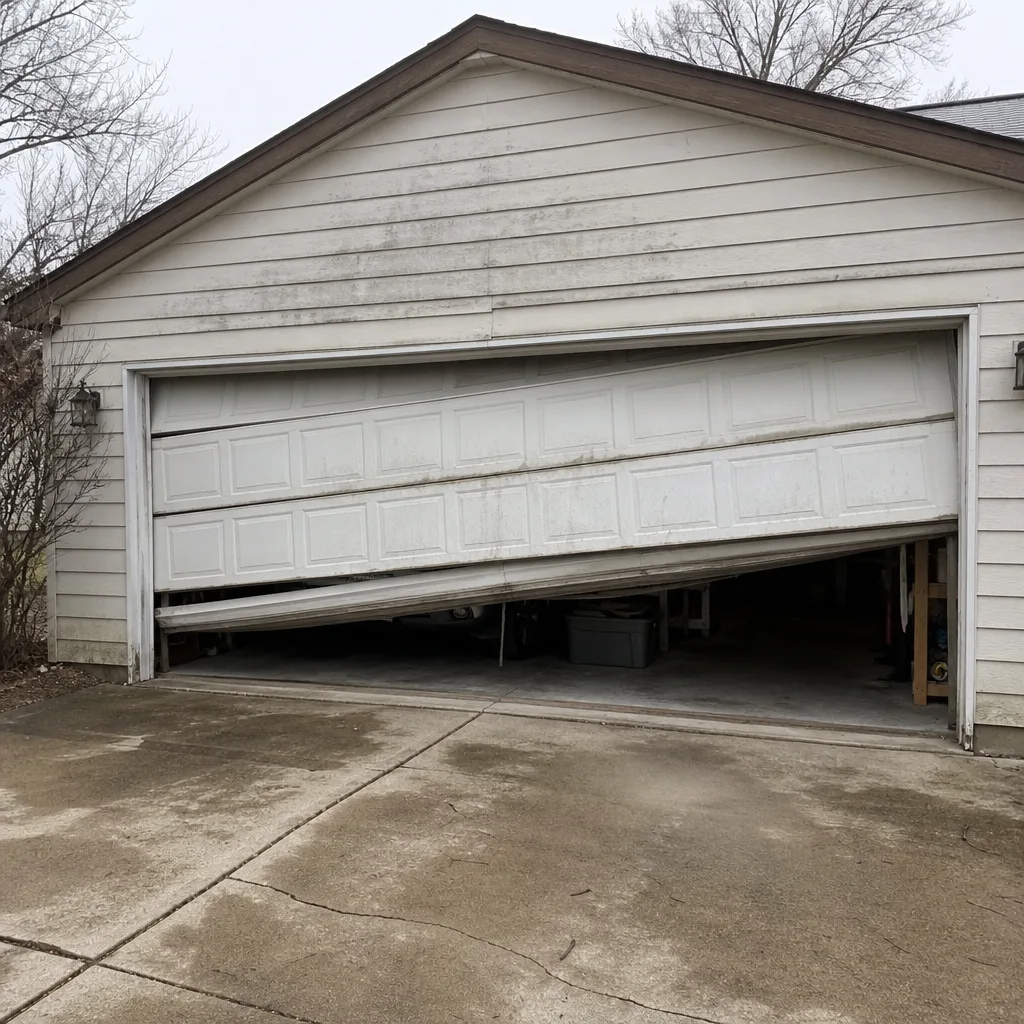 Before
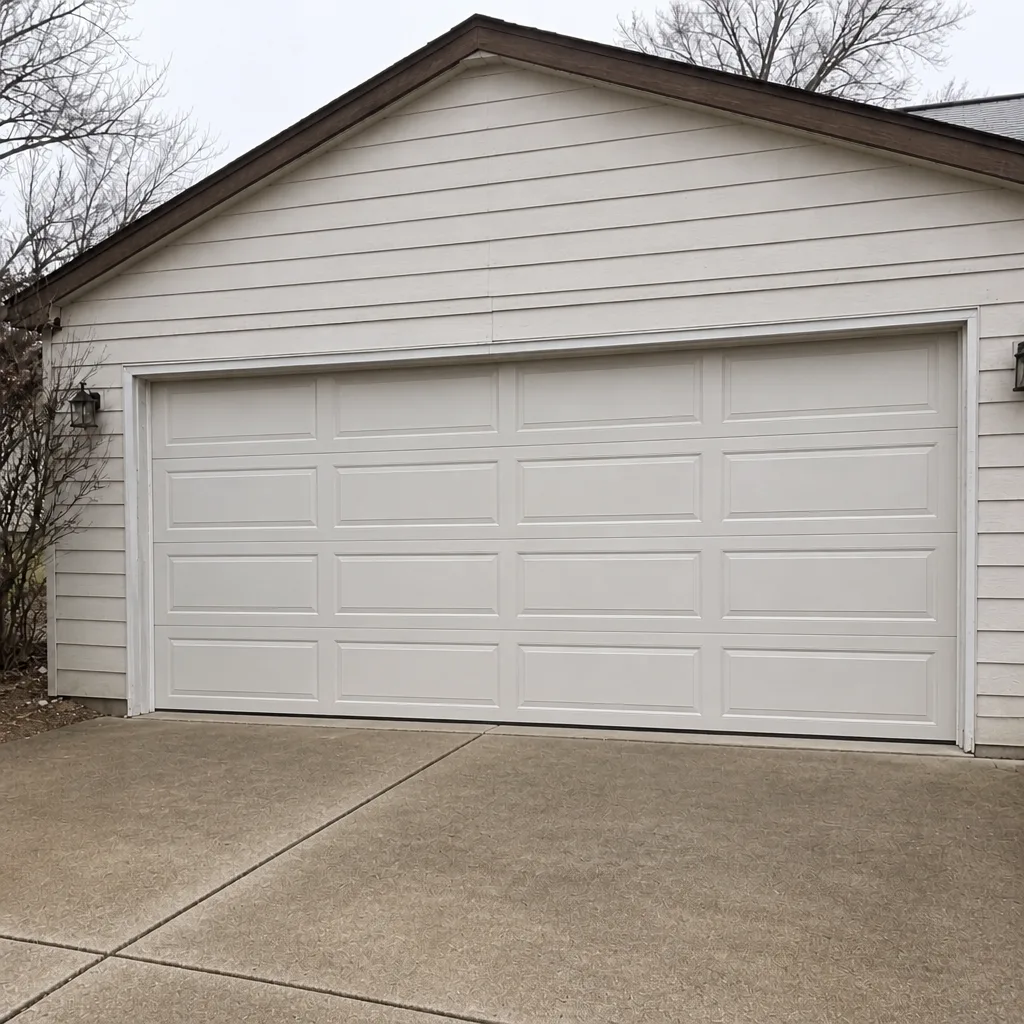 After
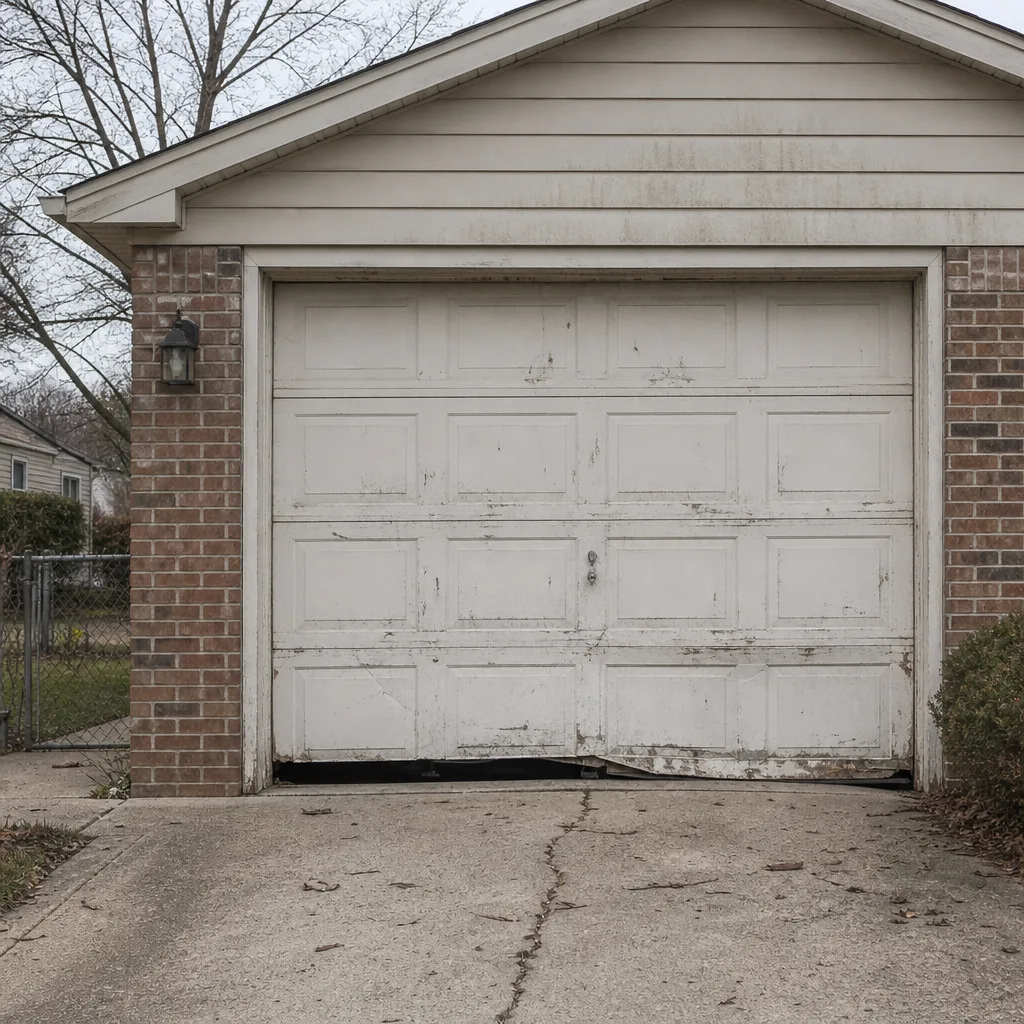 Before
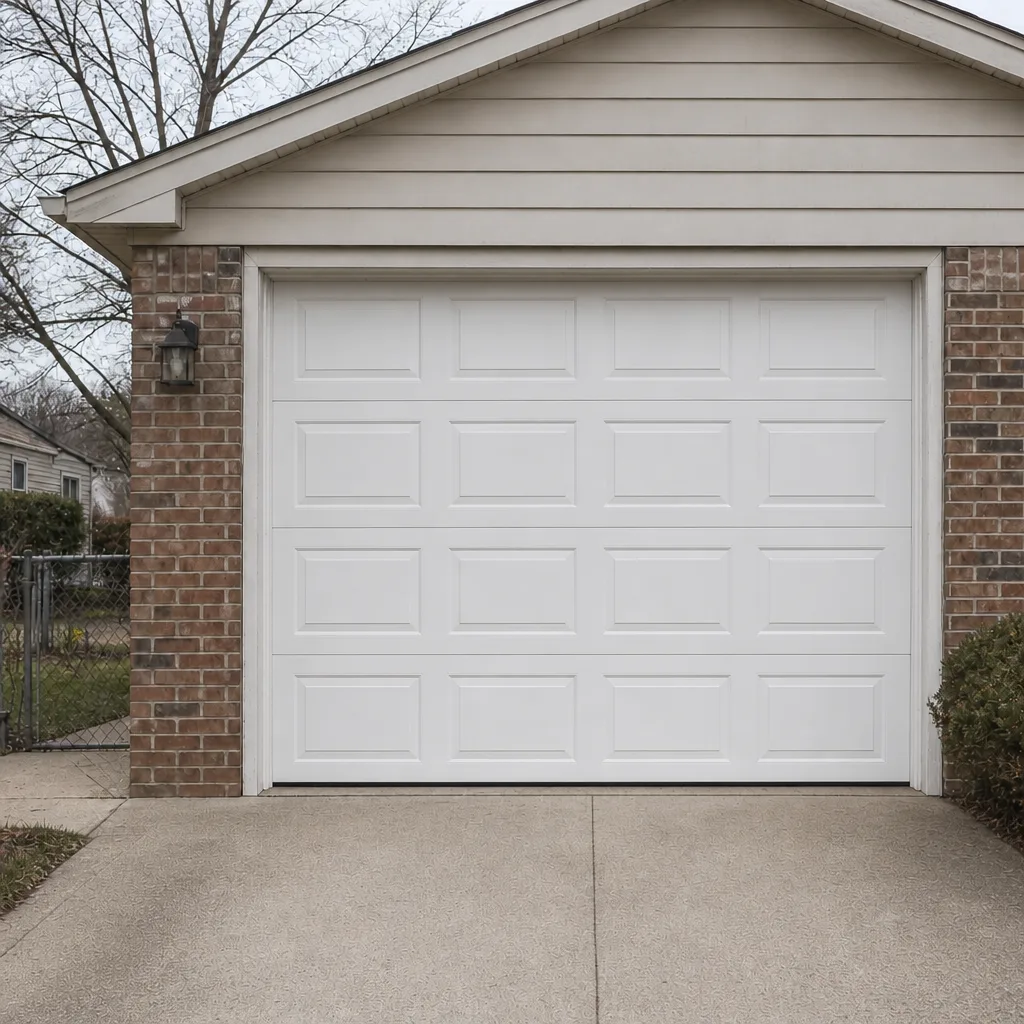 After
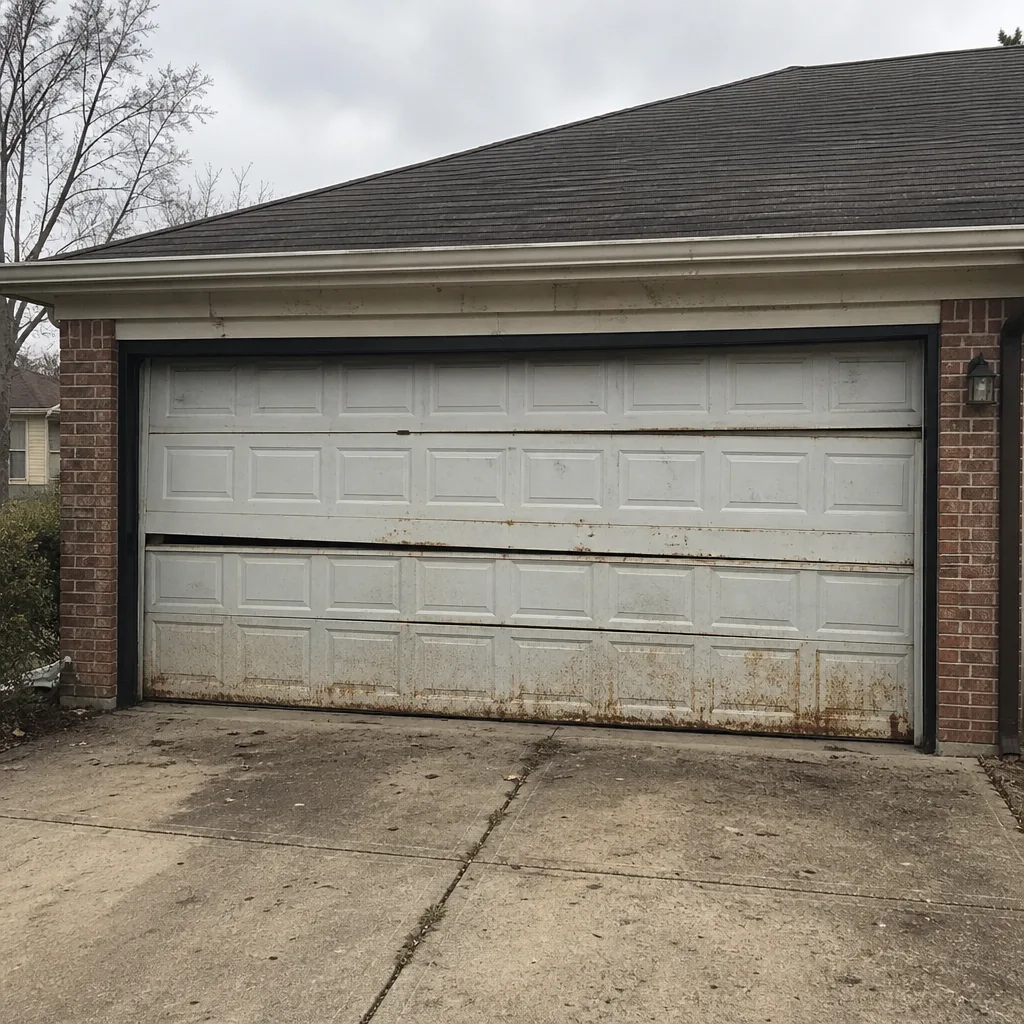 Before
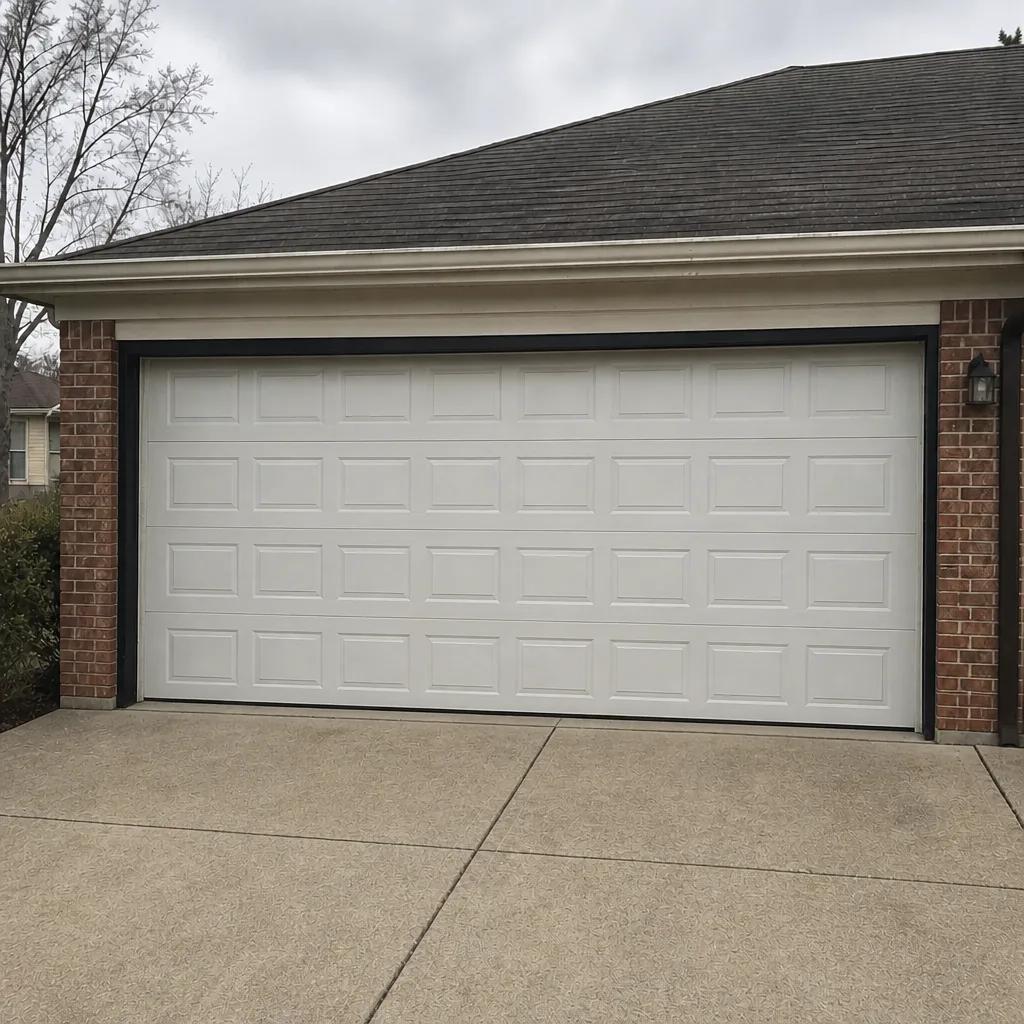 After
Common Mistakes to Avoid
- Spraying the tracks with lubricant. Tracks should stay dry; lubricant attracts grit and makes rollers bind worse. Lubricate the hinges and rollers, not the tracks.
- Skipping the fall seal check. A compressed bottom seal in October is a January cold-air problem. It’s one of the two tasks that really can’t be skipped in Indiana.
- Forcing a sluggish door open with the manual release. A door that won’t open smoothly usually has a spring problem. Forcing it can drop the door or strip the opener gears.
- Adjusting torsion spring tension as a DIY project. The springs hold hundreds of pounds of tension and the cables can cause serious injury. Spring work is a technician job.
- Using WD-40 as a lubricant. It’s a solvent. It loosens rust and then dries out the joint, often making the original squeak worse within a few weeks.
- Ignoring photo-eye misalignment in summer. Small drift in July is often the start of an opener that fails in August. Realign and re-test.
- Leaving the garage door spring unpainted and unchecked. Rust on a torsion spring (common in Noblesville humidity) accelerates fatigue. If you see flaking rust, that’s a diagnostic appointment, not a mid-winter DIY paint job.
- Assuming a new opener fixes a mechanical door problem. If the door itself is heavy or binding, a new opener will fail too. Diagnose the door first.
Frequently Asked Questions
Twice a year for most tasks, with the two fall seal and lubrication tasks done before the first freeze and the post-thaw inspection done in spring. Light refreshes in winter and summer (relubrication, photo-eye checks) take minutes and don’t need a set schedule. A professional inspection once a year, ideally in spring, covers the components homeowners shouldn’t touch.
You can lubricate hinges, steel rollers, and bearing plates yourself with a garage-door-specific lubricant. Torsion spring coils can be lightly sprayed as well, provided the door is at rest and the spring is intact. Do not attempt any lubrication that requires touching the spring coils while under tension or any adjustment to the spring set. Call (866) 616-9625 for anything that involves the spring or cables.
Cold tightens the metal in the door and thickens the lubricant, which adds effective load to a spring that’s been compensating for months. The result is that springs at the end of their service life fail on the coldest days. The fix is a fall lubrication and balance check so the spring isn’t fighting extra resistance when temperatures drop. Call (866) 616-9625 if the door isn’t opening fully in cold weather.
Heat. Garage spaces in central Indiana get much hotter than the rest of the house in July and August, and the heat degrades the opener’s logic board over time. Symptoms are intermittent reversals, no response, or photo-eyes that drift out of alignment. Most summer opener failures start in spring but only show up once temperatures rise. If your opener is behaving unpredictably in hot weather, call (866) 616-9625 for a diagnosis.
Yes, once a year. Springs and cables wear in ways that aren’t visible from the outside until they fail, and a spring that looks intact can be within weeks of failure. A springtime inspection catches those before they become a cold-morning lockout. Call (866) 616-9625 to schedule a free estimate; the written price is set before any work starts.
Pull the manual release cord to disconnect the opener and try the door by hand. If it moves easily, the problem is likely the opener or photo-eyes. If it’s very heavy or won’t move, the spring is likely broken and the door should not be operated until a technician looks at it. Call (866) 616-9625. We answer 24/7, and a call outside dispatch hours is booked into the next opening, Sunday through Friday, 7am to 7pm.
The Bottom Line
Seasonal care for a Noblesville garage door isn’t about one long annual task. It’s about matching the work to the season that stresses the component. Fall gets the door through the freeze with lubrication and a seal check. Winter is protection and careful observation. Spring is the post-thaw inspection that catches cable and seal failures early. Summer is opener electronics, photo-eyes, and wood door swelling. All four together take less than three hours a year, and they prevent the failures that cause the January and July emergency pattern. Springs and cables go to a technician. Everything else is within reach of a careful homeowner. The annual spring inspection is the one appointment worth keeping on the calendar.
If you’ve read through this and you’re not sure which season you’re starting from, or if the door has done something you don’t recognize, that’s the point to call rather than guess. We work on the brand you have. For a broader overview of the services we cover, see Noblesville Garage Door Repair Pros. For the estimate conversation, call (866) 616-9625 for a free estimate. Prices are quoted and agreed before any work starts, and the written estimate sets the final price.
Written by the team at Noblesville Garage Door Repair Pros.