
Last updated November 21, 2026
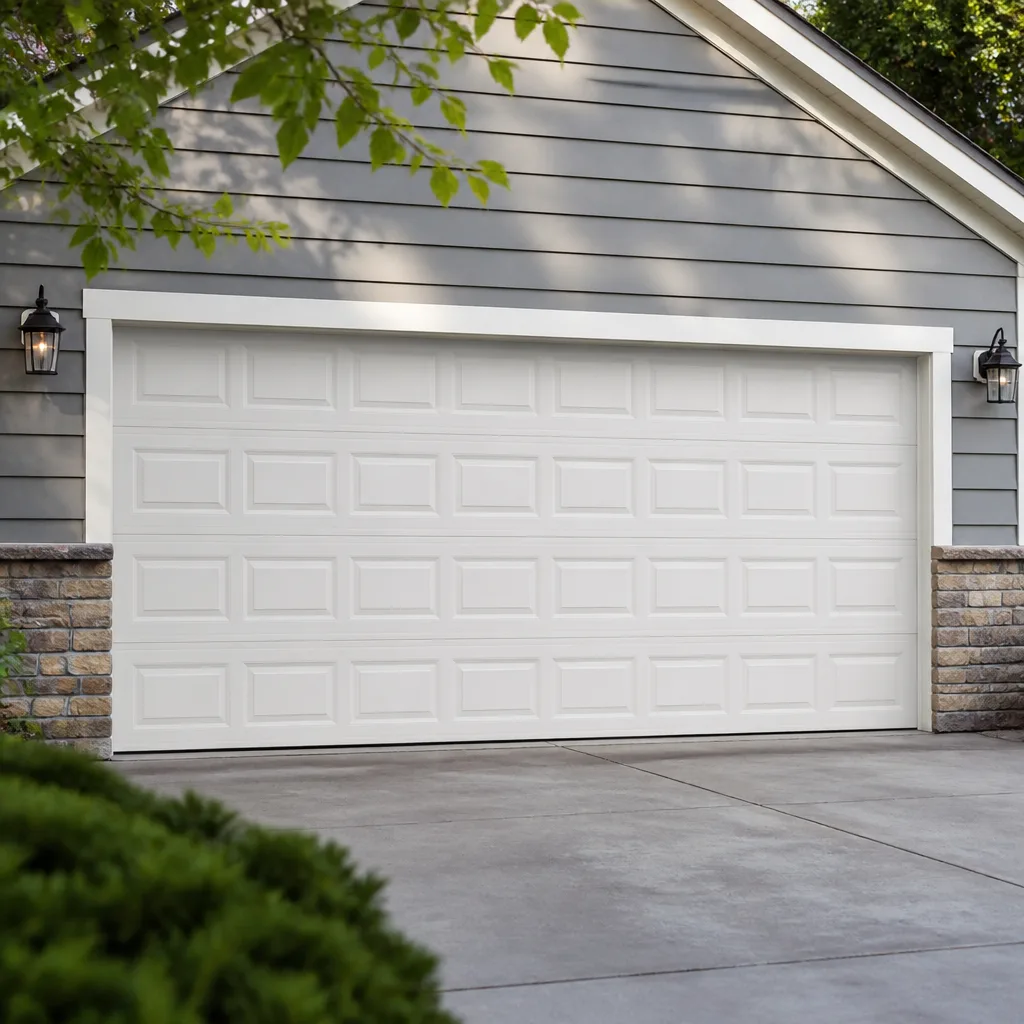 Raised-panel steel
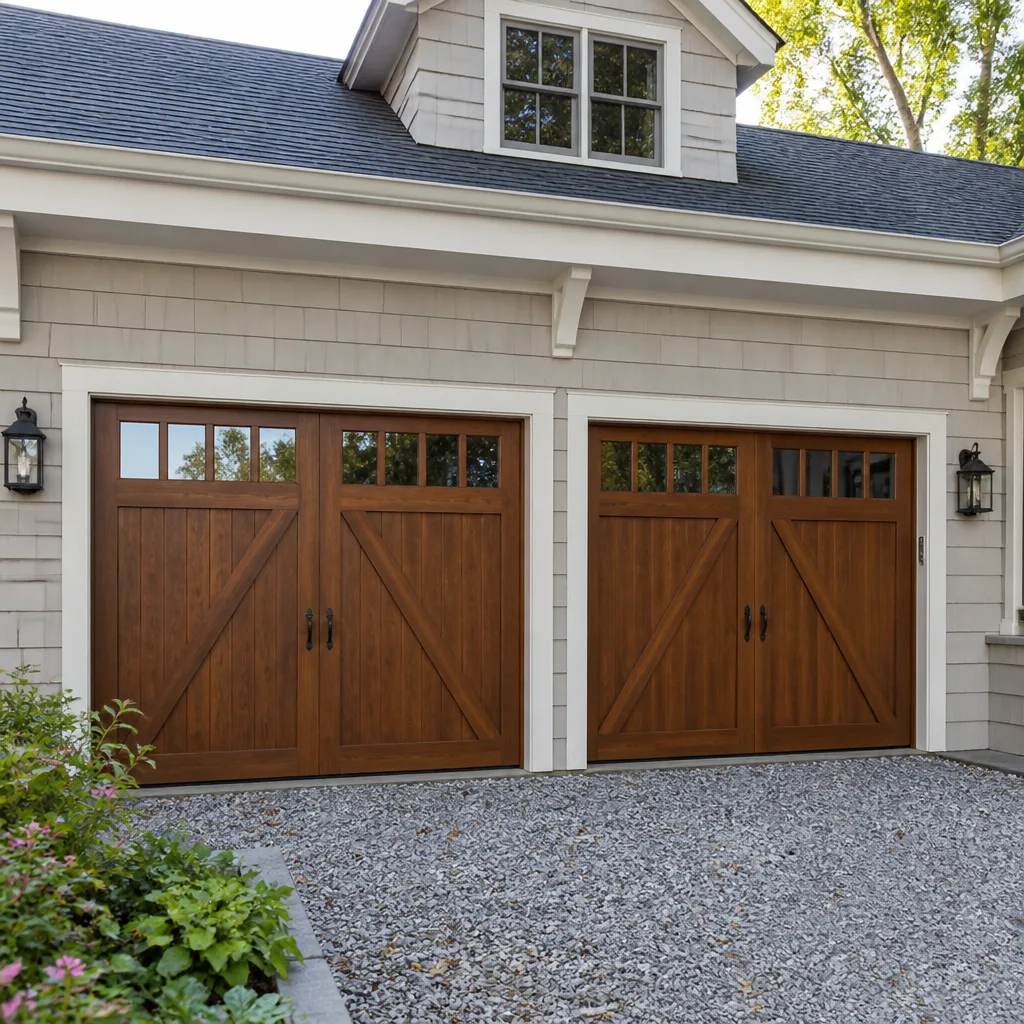 Carriage house
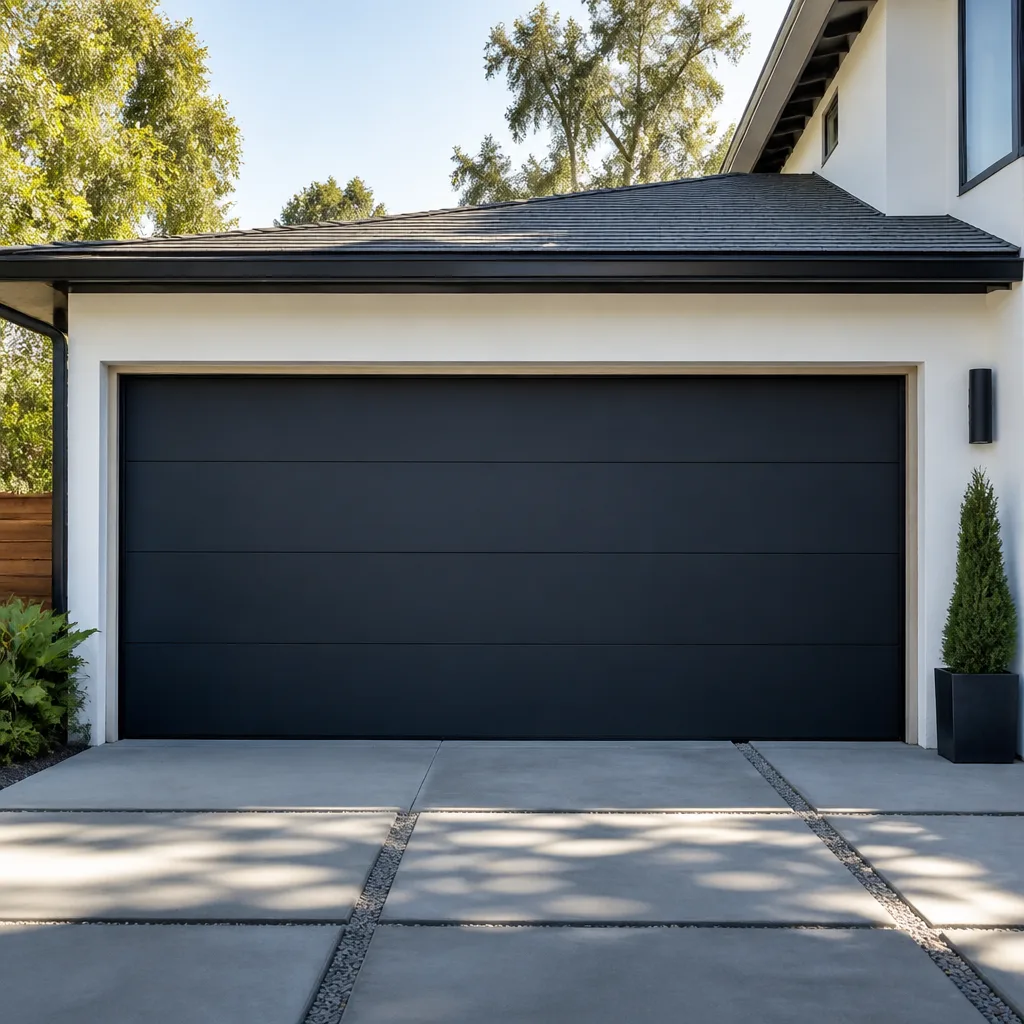 Modern flush
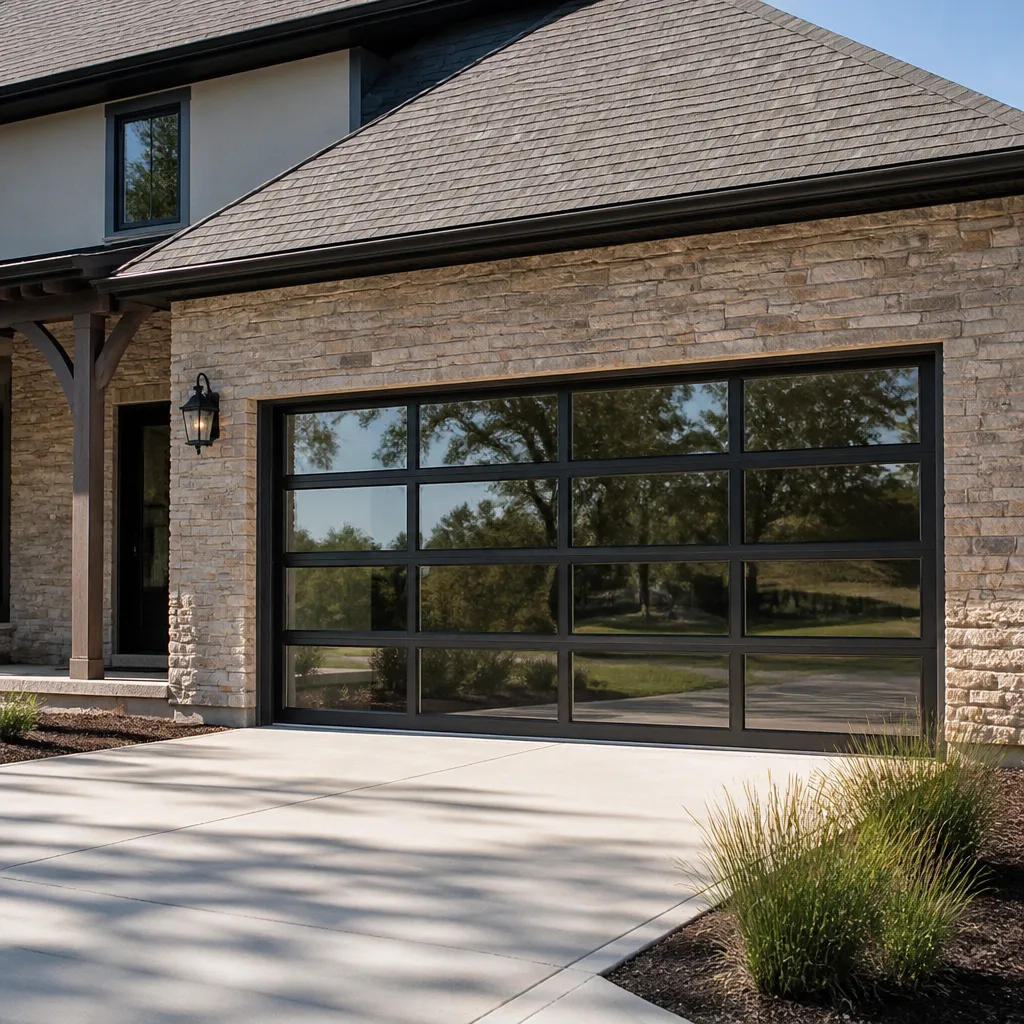 Full-view glass
 LiftMaster openers
 Chamberlain openers
Full 25-point door and opener safety check with every visit - springs, cables, rollers, tracks, and your LiftMaster or Chamberlain opener included
You get a price before we start. It does not change when the pro arrives.
Get your free estimateGarage Door Warning Signs: A Noblesville Homeowner’s Reference Guide
Most warning-sign guides hand you a list of symptoms and stop there. A popping noise, a slow door, a gap in the spring – and then the vague catch-all: “could be any number of things.” That’s not much help when you’re standing in your garage trying to figure out whether to call someone today or wait until next month. Here’s what those guides miss. Every symptom a garage door produces points to a specific component, and once you know which one, you can describe the problem accurately, judge how urgent it really is, and avoid paying for a diagnosis that starts from scratch. In Noblesville, where summers are humid and winters swing hard enough to work on wood and metal alike, we see the same handful of failure patterns repeat. This guide maps each warning sign to its cause and tells you which ones mean stop using the door today.
Quick Answer
The most serious garage door warning signs in Noblesville are a visible gap in a torsion spring, a frayed or kinked cable, a door that hangs crooked, and a loud pop followed by a door that won’t lift. Those four mean stop using the door and call for service. Grinding, scraping, and a door that reverses before closing are usually maintenance issues you can schedule within a week. Our technicians have up to 12 years of experience, and these are the patterns we look for first on any call.
Styles & brands we work with
- Raised-panel steel
- Carriage house
- Modern flush
- Full-view glass
- LiftMaster openers
- Chamberlain openers
Table of Contents
- Symptom to Cause: What Each Sound and Behavior Actually Means
- Urgency Tiers: Stop Today, Schedule This Week, or Watch
- Ten-Minute Visual Checks You Can Do Yourself
- Torsion vs. Extension Springs: How the Warning Signs Differ
- The Minor-Looking Signs That Cause Expensive Cascading Damage
- Why Brand Familiarity Shortens the Diagnostic
- Noblesville Seasonal Patterns and What They Do to Your Door
- What to Have Ready When You Call
Symptom to Cause: What Each Sound and Behavior Actually Means
A garage door is a simple machine with a small number of moving parts, and each part fails in a recognizable way. The sound matters. So does when it happens – on the way up, on the way down, or at rest. When a Noblesville homeowner tells us “my door is slow,” the answer could be the opener’s motor, the springs, the rollers, the tracks, or the balance of the whole door. Two quick follow-up questions narrow it to one.
Here’s how we connect the noise to the part.
- Grinding that rises and falls with door travel: almost always rollers or hinges. Metal rollers with worn bearings drag against the track, and the sound cycles as the door passes each hinge point. Nylon rollers go quiet when they fail; steel ones get loud.
- A sharp pop, then a door that feels unusually heavy: a broken torsion spring. The pop is the spring letting go, and the door suddenly weighs far more than the opener can lift. Stop using it.
- Scraping along one side: the door is out of alignment in the track, or a roller has jumped its channel. Sometimes a bent track section is the cause.
- A rhythmic thumping or banging: a loose hinge, a missing bolt, or a roller that has come partly out of its bracket. On a Wayne Dalton or Clopay door with older hardware, this is common after a hard winter.
- A hum from the opener with no movement: the motor is running but the drive isn’t engaging – a stripped gear, a broken belt, or a failed capacitor, depending on the unit. This belongs in garage door opener repair territory, not spring work.
- A door that reverses before it touches the floor: the safety sensor is misaligned or the travel limit is set wrong. Not dangerous, but it will keep the door from closing.
The point of mapping sound to part is speed. When you can tell us “it grinds going up, only on the left side,” we know before we arrive whether to expect a roller, a track, or a hinge. That’s a shorter diagnosis and, usually, a smaller repair.
Urgency Tiers: Stop Today, Schedule This Week, or Watch
Not every warning sign carries the same weight. The mistake homeowners make is treating a cosmetic noise the way they’d treat a broken spring, or worse, treating a broken spring like a cosmetic noise. Here’s how we sort them in Noblesville.
Tier 1: Stop using the door today
- A visible gap in a torsion spring (a coil that has separated).
- A frayed, kinked, or snapped cable.
- A door that hangs visibly crooked or has come off one track.
- Any loud pop followed by a door that won’t lift or feels extremely heavy.
- A door that falls rather than lowers when you release the opener.
These are safety issues, not convenience issues. High-tension springs and cables store enormous force, and a door supported by a compromised one can come down hard. Keep it closed, don’t force it, and call for emergency garage door service.
Tier 2: Schedule within a week
- Grinding, scraping, or squealing during travel.
- A door that reverses before closing.
- An opener that hums without moving the door.
- A remote or wall control that works intermittently.
None of these are dangerous yet. All of them get worse, and some get much more expensive if left.
Tier 3: Watch and wait
- Occasional squeaks you can trace to a hinge.
- A slightly louder door than last year.
- A remote that needs a firmer press than it used to.
These are the early signals. A little attention now – lubrication, a battery swap, a hinge check – keeps them in this tier. Routine care is also the time to think about garage door repair before a small job becomes a large one.
Ten-Minute Visual Checks You Can Do Yourself
You don’t need tools or training to spot the four most important warning signs. You need ten minutes and a flashlight. These checks tell you what to look at and what “normal” looks like, so you can describe what’s off when you call. They don’t involve touching springs or cables – those are high-tension parts and belong to a trained technician.
- Look at the spring, don’t touch it. On a torsion system, the spring is the horizontal coil on the shaft above the door. A healthy spring is one continuous coil. A clear gap between turns means it has broken. On an extension system, the springs run along the horizontal tracks overhead; look for one spring that’s stretched straight and slack while its partner is still coiled. That’s a break.
- Check the cables for fraying. With the door closed, look at the cables running down each side. You’re looking for kinks, loose strands, or a cable that’s jumped its drum. Frayed cables are a Tier 1 stop sign.
- Check the track for gaps. Run your eye down both vertical tracks. The gap between the roller and the inside of the track should be tight – you shouldn’t be able to slip a finger between a roller and its channel. A gap means the roller or track is worn. Also look for any dents or bends in the track itself.
- Check the balance. With the door closed and the opener disconnected (on most openers, pull the red release handle), lift the door about halfway by hand and let go. A balanced door holds roughly where you leave it. One that drops on its own has weak springs or is out of balance. A door that won’t stay up at all is on weak springs. If it feels too heavy to lift safely, don’t force it – that alone is a reason to call.
One caution: with the door closed, don’t put your hands into the gap between sections or near the springs. Visual inspection only. If any check turns up a Tier 1 sign, stop there and call.
What Happens When You Call
You’ll get a real answer, not a holding pattern. We answer 24/7. Fast dispatch from 7am to 7pm, Sunday through Friday. When you describe the symptom, we know what to expect. If the door is stuck open, off its track, or unsafe to use, we treat it as emergency garage door service, because a door that won’t close leaves a home unsecured. The estimate is free, and the price is set by the written estimate before any work starts. Call (866) 616-9625.
Torsion vs. Extension Springs: How the Warning Signs Differ
Noblesville has both spring systems in its housing stock, and the way each one fails looks different. If you don’t know which you have, the location of the spring tells you everything. Torsion springs sit above the door on a horizontal shaft; extension springs run along the horizontal tracks on each side, stretching lengthwise as the door closes.
Torsion spring warning signs
- A visible gap in the coil. The most reliable sign a torsion spring has broken. On older springs, the gap can be a full coil width or more.
- A door that suddenly feels very heavy. With the spring broken, there’s nothing counterbalancing the door’s weight. Most openers can’t lift it.
- A single loud bang. Torsion springs fail all at once, not gradually. The bang is the spring unwinding.
- Uneven travel. A torsion spring that’s losing tension will let the door drift sideways or hang slightly crooked at one end.
Extension spring warning signs
- One spring stretched straight and slack. Extension springs fail one at a time, so the surviving spring takes the whole load. The door will still move, which is what makes extension failures trickier.
- A door that slams down. With one spring gone, the door comes down harder than it should, and the opener strains on the way up.
- Visible wear at the spring’s coil ends. Look for the spring that looks more stretched than its partner, or has a coil that’s separated.
- A stretching or “creeping” sound. Some extension springs make a bang like torsion springs, but others fail quietly and just stop holding.
The one thing both systems share: when a spring fails, it’s never a DIY job. A matched pair is usually replaced together, because a new spring paired with a tired one will out-work the old one and fail sooner. Spring work is high-stakes, and we do it as a primary service in Noblesville, not as a reluctant add-on. When one spring is visibly broken, the safest call is to have both evaluated together.
The Minor-Looking Signs That Cause Expensive Cascading Damage
The classic case of a small sign becoming a big repair is a worn roller. It looks like nothing. The door still opens. But a roller with a seized bearing doesn’t roll – it drags, and the drag chews at the track a little with every cycle. Left alone, a cheap roller replacement turns into a track replacement, and in a bad case, a door that’s out of alignment and never quite closes right again. That’s the pattern to watch for across the whole system:
- Worn rollers destroy tracks. Seized rollers drag the door into the track, wearing grooves that eventually pull the door out of alignment.
- A weak spring strains the opener. A door on tired springs makes the opener work harder on every cycle. The opener’s motor and drive gears wear out faster, and a failed opener is a much bigger job than a spring replacement.
- A sagging door wears the hinges and panels. When the door hangs slightly crooked, the hinges and panel edges carry more load, and the panels themselves start to distort.
- A misaligned sensor keeps the door from closing. That seems harmless until you realize the door is being left open at night.
- A noisy hinge loosens the next bolt. The vibration from one loose hinge works on the screws around it, and the door’s hardware loosens as a set.
None of these are urgent in a single moment. All of them are urgent over time. The reason we emphasize routine inspections is that a twenty-dollar roller is much cheaper than a track and a door realignment, and much cheaper than a new opener.
Why Brand Familiarity Shortens the Diagnostic
Garage doors from Clopay and Amarr share core components but differ in how their panels and hinges are fastened. Opener systems from LiftMaster, Chamberlain, Genie, and Craftsman each use different drive mechanisms, logic boards, and sensor wiring. A technician who works across a range of brands can look at the door in front of them and skip a lot of guessing.
What that means for you is simple: the symptom means what it means, regardless of the brand. A grinding door is still a roller issue whether the door is a Clopay or a Wayne Dalton. But the fix depends on the specific door and opener. A Craftsman opener with a stripped gear gets a gear kit; a belt-drive Genie with a slipping belt gets adjusted differently. When you call, tell us the make of your door and opener if you know it. If you don’t, the label on the opener unit and the manufacturer’s plate on the door’s bottom bracket will tell us once we’re on site.
If the door has reached the end of its useful life, brand familiarity works the other way. We can match a replacement to your existing panels and opener, or recommend a full system that fits the space. If the repair has turned into a replacement, that’s covered under garage door installation – and we’ll walk you through the options before you commit. A new door is measured, ordered, and scheduled; it isn’t a same-day job.
Noblesville Seasonal Patterns and What They Do to Your Door
Indiana weather is hard on garage doors. The swing from humid summer air to freezing winters works on the springs, the wood, and the hardware at different times of year. Here are the patterns we see in Noblesville homes across the seasons.
- Winter: cold shrinks and stiffens metal, and torsion springs are more prone to fail in a cold snap. Doors that bind slightly in warmer weather can stick in the cold. The door’s bottom seal cracks and lets cold air under.
- Spring: the thaw and wet weather show up in the tracks. Dirt and grit wash into the rollers and the tracks, so a door that was quiet in winter starts grinding in spring.
- Summer: high humidity swells wood doors and wood-framed openings, which can bind a door in its tracks. Springs can also lose tension with the heat and humidity.
- Fall: the transition season. Doors that bind in winter often start to show signs in fall – the first slow lift, the first hesitation at the top of travel.
A door that’s sluggish in January and fine in June isn’t a mystery. It’s the temperature working on the springs and the tracks. The value of a fall inspection in Noblesville is catching those seasonal signs before the cold locks them in place.
What to Have Ready When You Call
You don’t need to diagnose the problem yourself, but a few details sharpen the diagnosis before we arrive.
- The symptom and when it happens. “Grinds going up, only on the left” is worth more than “it’s loud.”
- Whether the door still opens. If it’s stuck, say where – closed, open, or halfway.
- The make of the door and opener if you know it. If not, the label on the opener and the manufacturer plate on the door.
- Whether it’s a torsion or extension spring system. Look above the door: shaft with a coil, or springs along the tracks.
- Whether anyone is parked inside and can’t get out. That changes how we schedule your call.
If you’ve got a stuck car, a door that won’t close, or a door hanging off its track, that’s emergency service territory. We treat it that way. For everything else, the estimate is free and the price is set before any work starts.
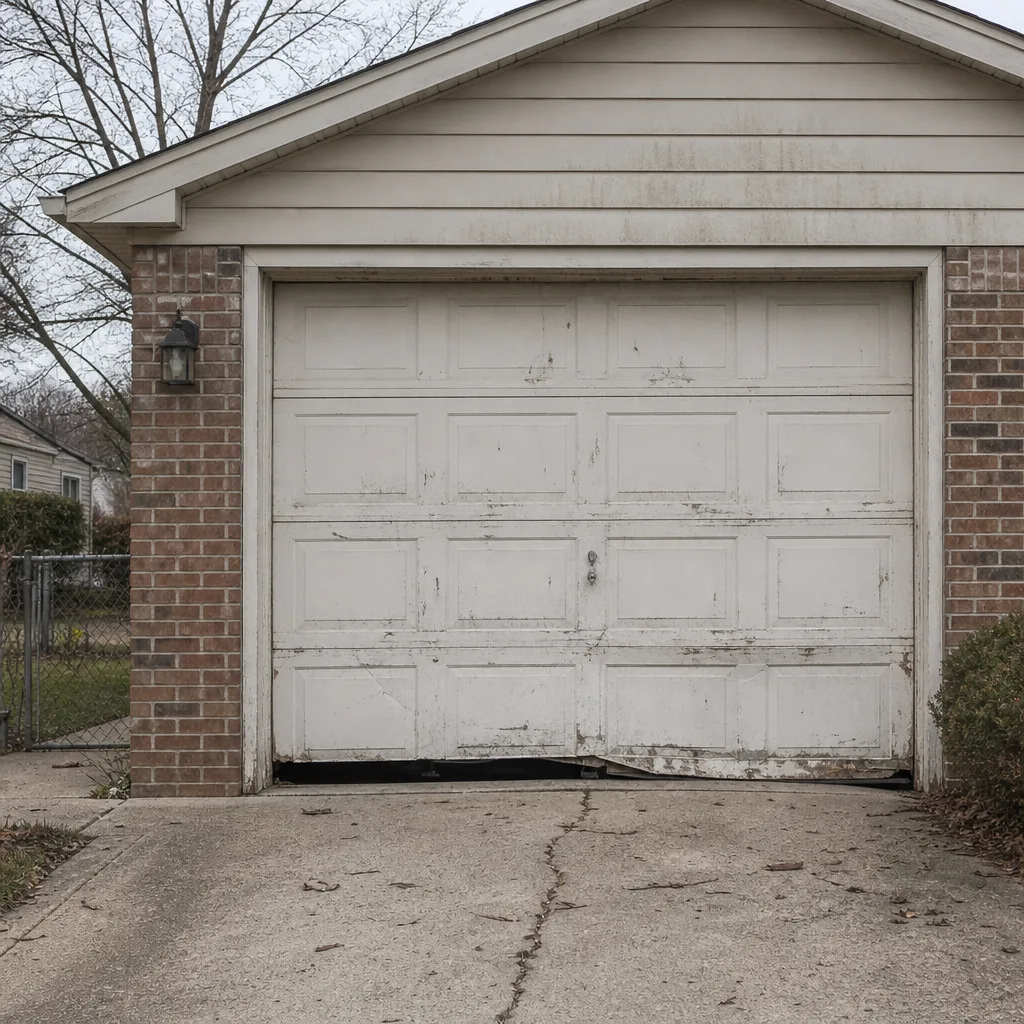
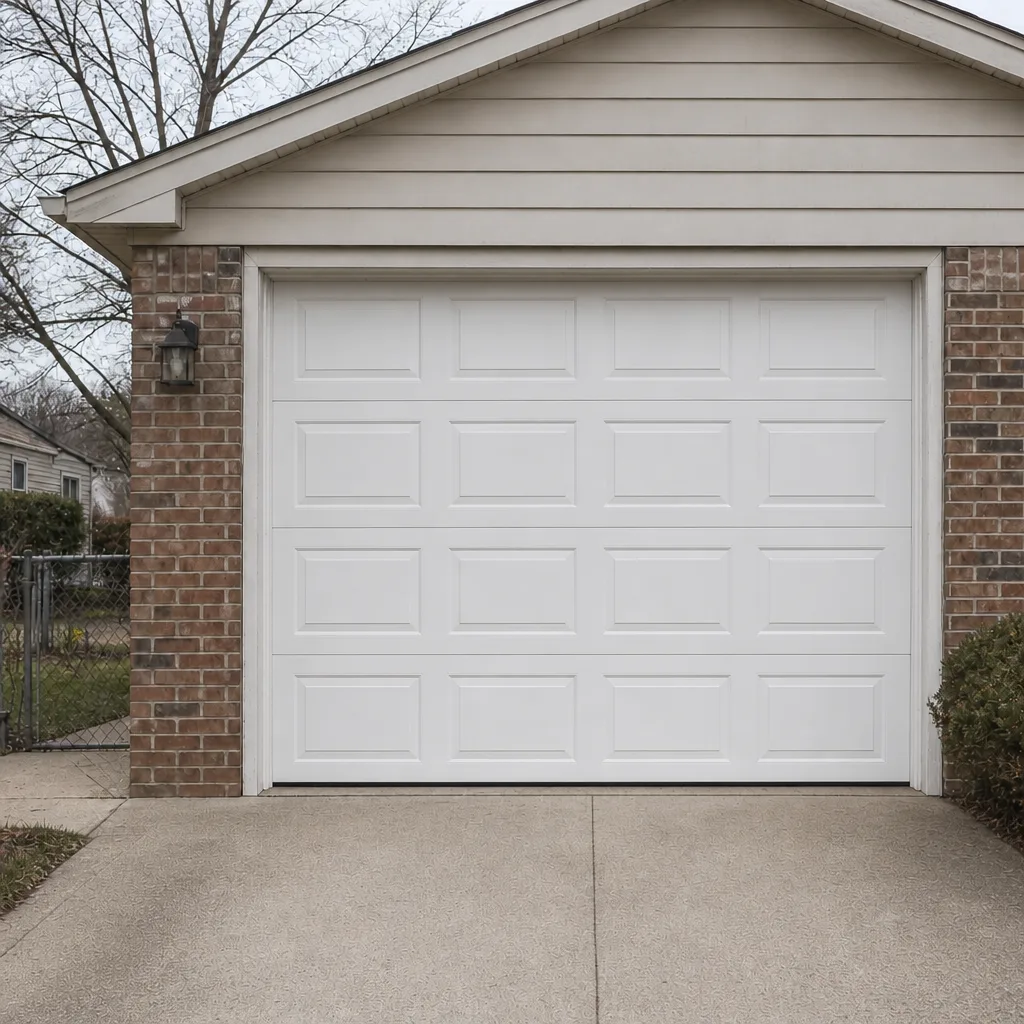
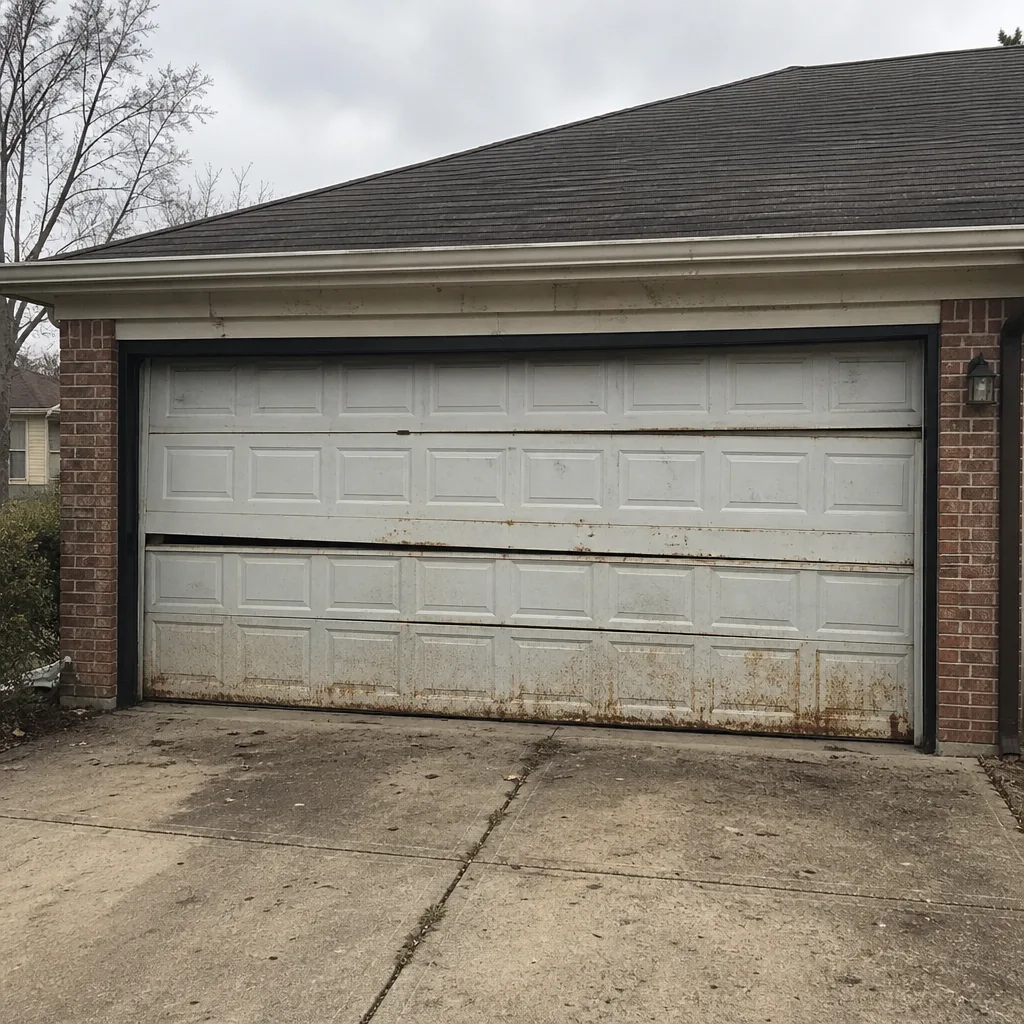
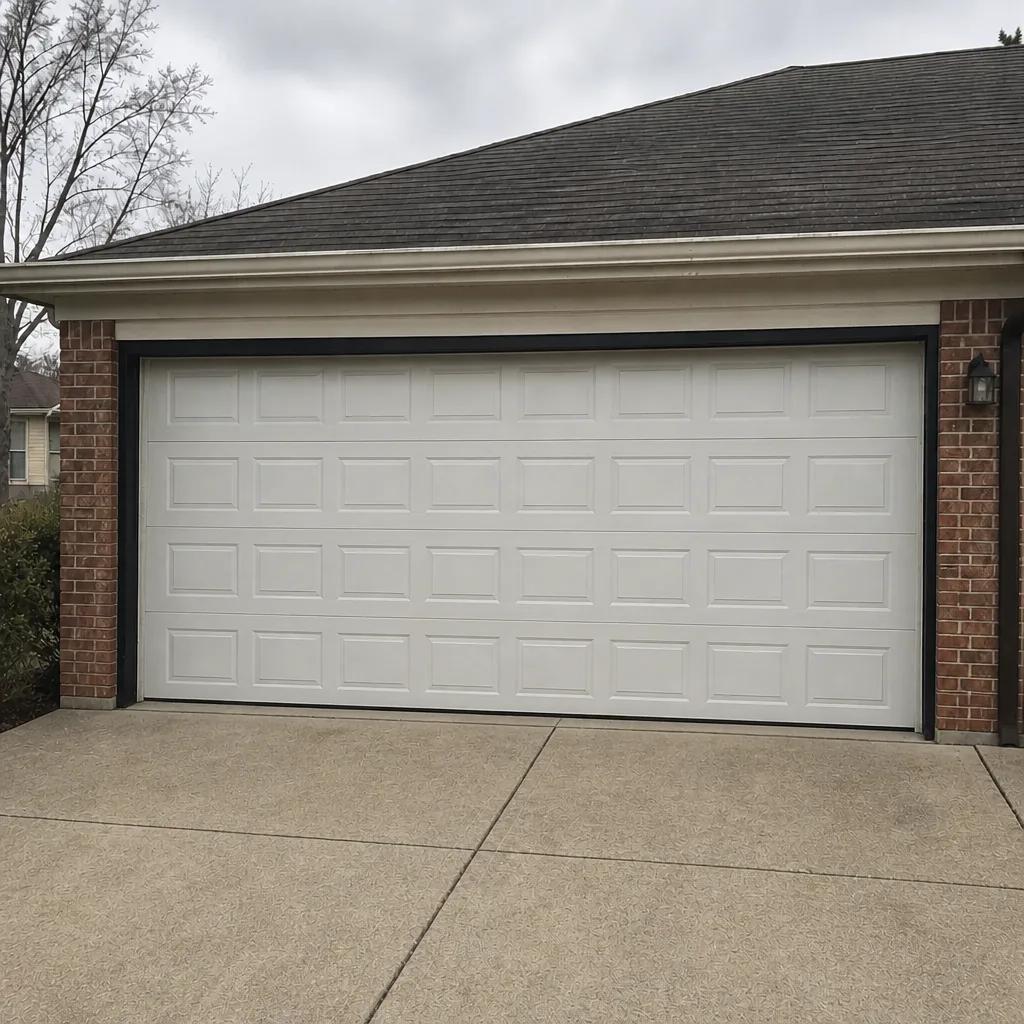
See the difference
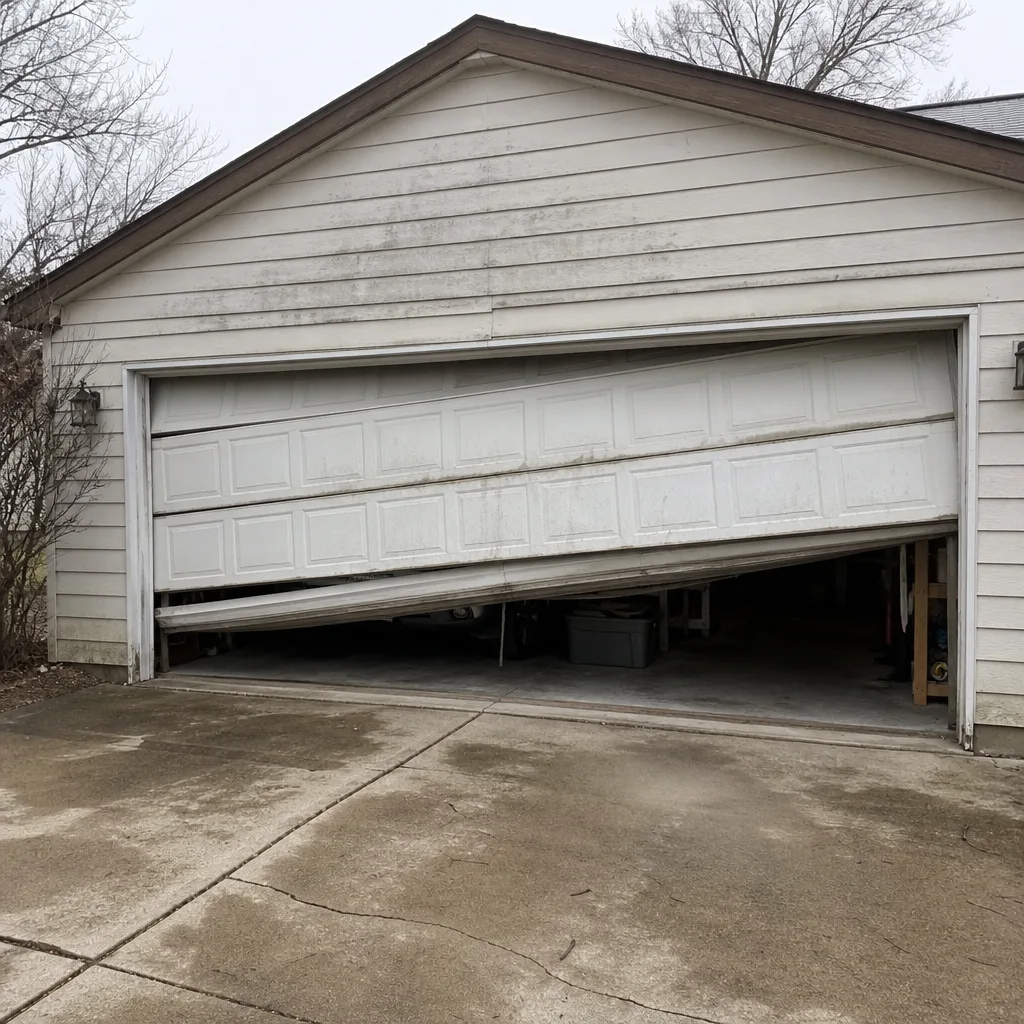 Before
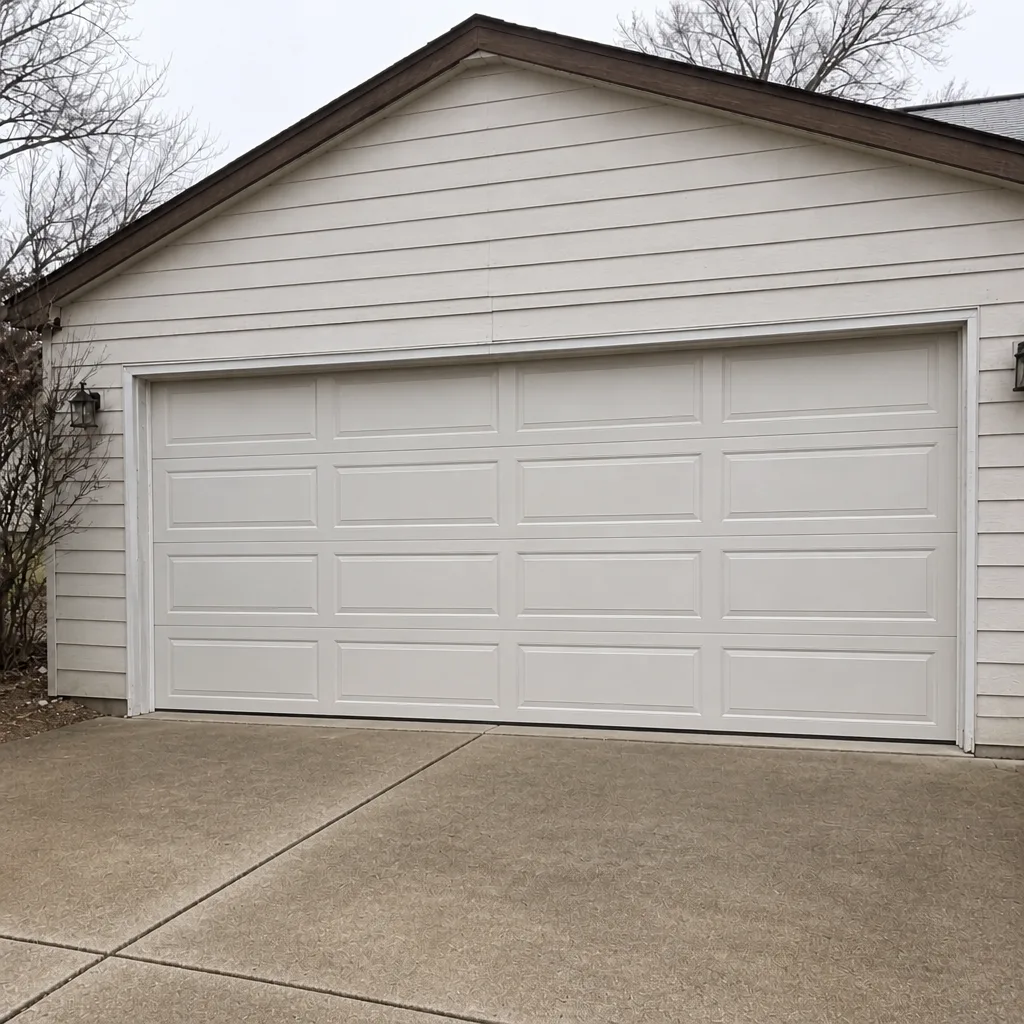 After
 Before
 After
 Before
 After
Common Mistakes to Avoid
- Forcing a door that feels heavy. When a spring has failed, the door weighs far more than it’s designed to and the opener can’t handle it. Forcing it either burns out the opener or risks the door coming down on the car or a person. Leave it closed and call.
- Lubricating a torsion spring or cable. High-tension parts don’t benefit from homeowner lubrication, and reaching into a tensioned spring is a genuine injury risk. Lubrication belongs on hinges and rollers, not springs or cables.
- Ignoring grinding for “a few more months.” Grinding rollers eat tracks. Track replacement costs several times more than a roller replacement, and a realigned door is never perfectly quiet again.
- Treating extension springs like torsion springs. In Noblesville homes with extension spring systems, one spring can fail while the door still moves. That surviving spring is doing double work, and waiting on it is what causes a door to slam.
- Straightening a bent track yourself. A bent track is often a symptom of a door that’s out of alignment, not a cause. Straightening it in place can leave the door worse off than before.
- Letting a reversing door run. A door that reverses before closing is usually a sensor problem, but the opener keeps cycling trying to close it. If you leave it, the motor wears out and the problem gets more expensive.
- Assuming a new opener will fix a spring problem. A new opener on a door with weak springs just puts a fresh motor on the same overloaded door. The spring is the problem; the opener is the symptom.
When to Call a Professional
Call when the door pops, hangs crooked, or won’t lift. Call when a spring shows a gap or a cable looks frayed. Call when the door reverses before closing and you can’t work out why. Call when the door grinds, and especially when the grinding gets louder. Call when you can’t get the car out or the house is left open. And call before you reach for a tool on a torsion spring, cable, or track – those parts carry stored force, and a trained technician is the safe route.
Noblesville Garage Door Repair Pros offers free estimates in Noblesville – call (866) 616-9625. We answer 24/7. Fast dispatch from 7am to 7pm, Sunday through Friday. Our technicians have up to 12 years of experience and work on the brand you have, from Clopay and Amarr doors to LiftMaster and Craftsman openers.
Frequently Asked Questions
A visible gap in a torsion spring, a frayed or snapped cable, or a door that hangs crooked is the most serious sign and means stop using the door and call for service. Any of these can fail suddenly and cause injury or property damage. Call (866) 616-9625 – the estimate is free.
Look at the spring without touching it. On a torsion system, the spring is the horizontal coil above the door; a clear gap between turns means it’s broken. On an extension system, one spring will look stretched straight and slack while the other is still coiled. If either looks wrong, don’t run the door. Call (866) 616-9625 and we’ll book a free estimate.
Not always. A squeaky hinge or a remote that needs a firmer press is normal wear and can be handled with routine maintenance. But grinding, scraping, and a rhythmic thumping are signs of rollers, tracks, or hinges that are failing. If the noise has gotten louder or more frequent, it’s worth having someone look. Call (866) 616-9625 for a free estimate.
No. Torsion and extension springs are high-tension parts, and a spring failure can happen with almost no warning. Spring repair is trained work, and it’s a primary service for us. Call (866) 616-9625 – we’ll give you a written estimate before any work starts, and the price doesn’t change once the job’s underway.
The safety sensor is the usual cause. Either it’s misaligned, blocked by dirt or an object, or the opener’s travel limit is set wrong. If cleaning the sensor eyes and clearing the door’s path doesn’t fix it, the opener likely needs adjustment. Call (866) 616-9625 and we’ll diagnose the opener and sensor together in one visit.
Spring repair is priced per job by the written estimate, because a matched pair is usually replaced together and the cost depends on the spring system. The estimate is free and you get the price in writing before any work begins. Call (866) 616-9625 and we’ll book a visit – there’s no surcharge for same-day service.
The Bottom Line
A garage door warning sign is not a vague omen. It’s a specific part telling you it’s failing, and matching the sign to the part is what turns a list of symptoms into a plan. Popping means springs. Grinding means rollers. Scraping means tracks. Hanging crooked or off the track means stop today. Grinding and reversing mean schedule this week. And the quiet signs – a slightly louder door, a remote that needs a firmer press – are the early signals that, caught now, stay small. For homeowners in Noblesville, knowing which of the three urgency tiers your door is in is the whole game, and it’s a ten-minute check.
Call (866) 616-9625 for a free estimate. We answer 24/7. Fast dispatch from 7am to 7pm, Sunday through Friday, and same-day service when the situation calls for it. Whether the door needs a repair, a spring, a new opener, or a full replacement, one call covers it – and we’ll tell you the price up front, before we pick up a tool.
Written by the team at Noblesville Garage Door Repair Pros.